
It is [man’s] God-given task to reconcile and harmonize the noetic (spiritual) and the material realms, to bring them to unity, to spiritualize the material, and to render manifest all the latent capacities of the created order.
Bishop Kallistos Ware, The Orthodox Way
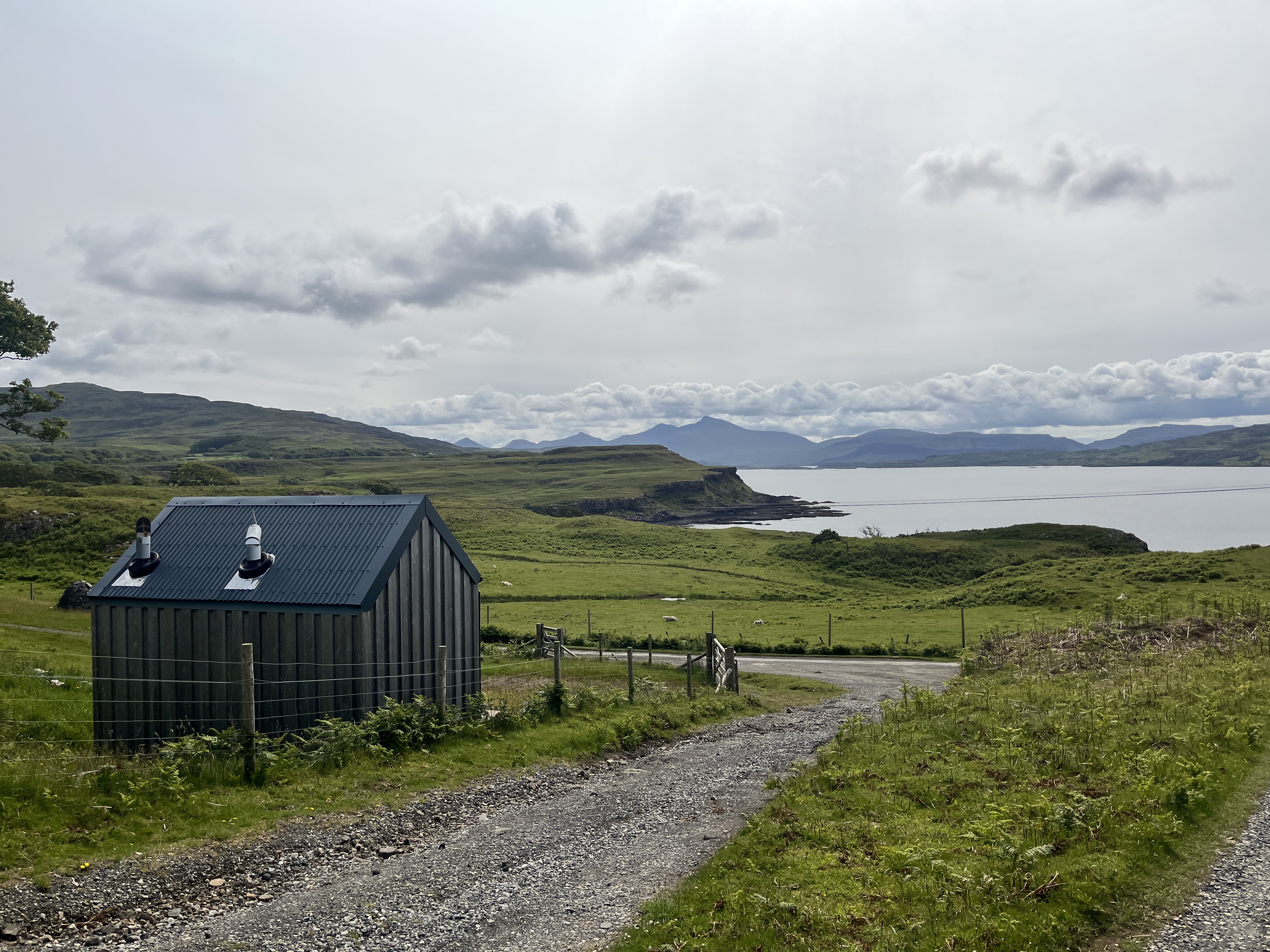
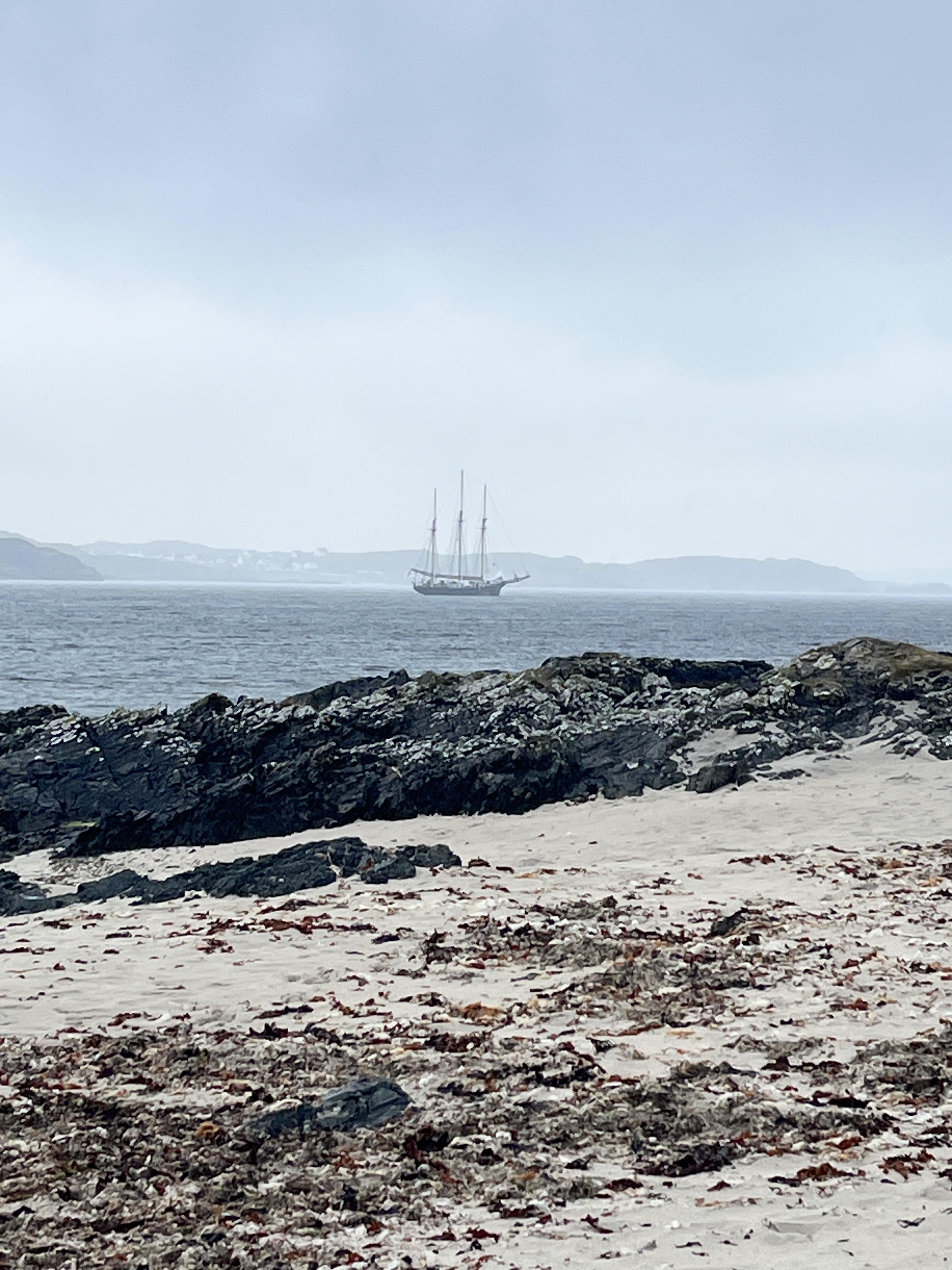
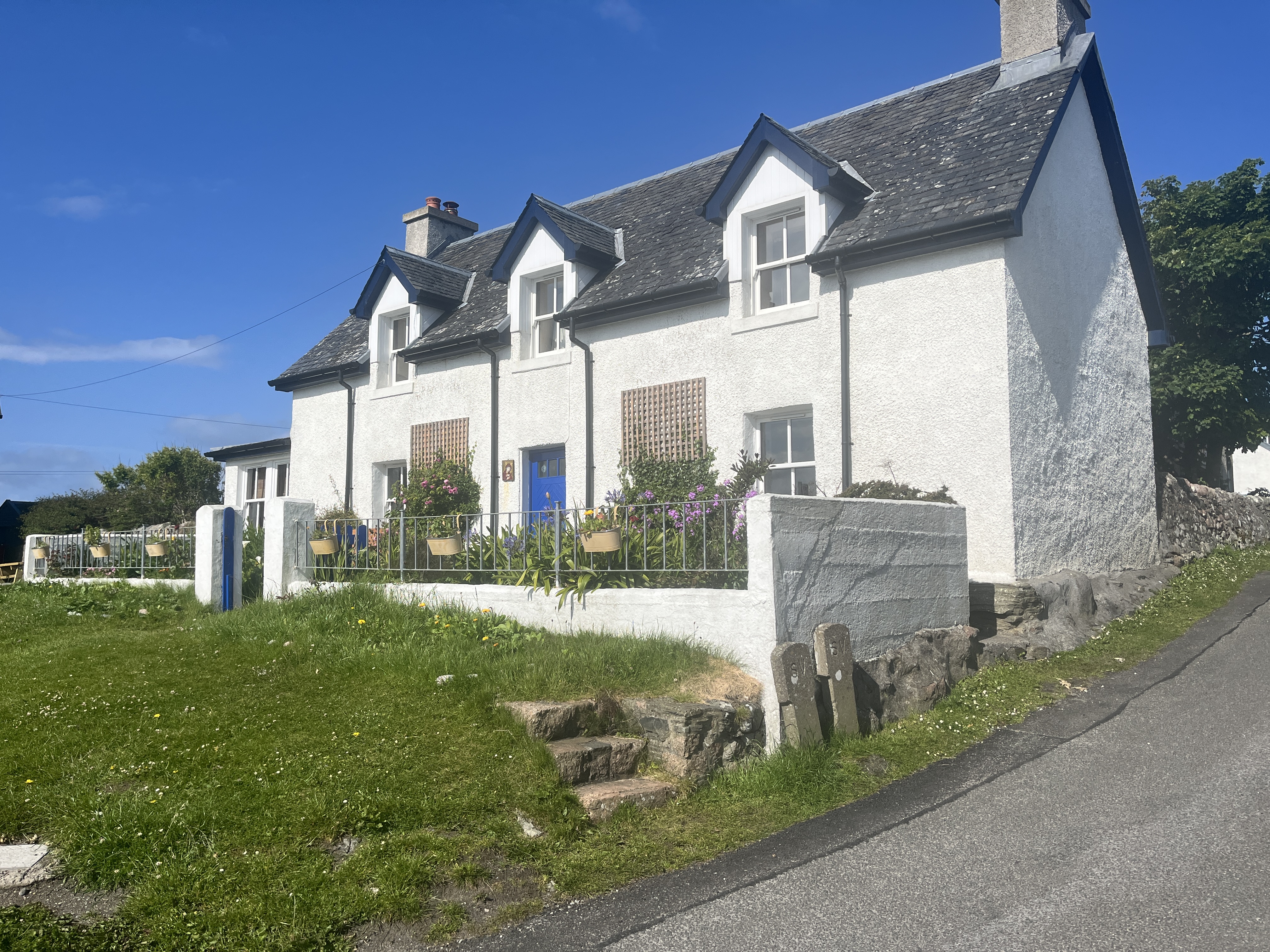
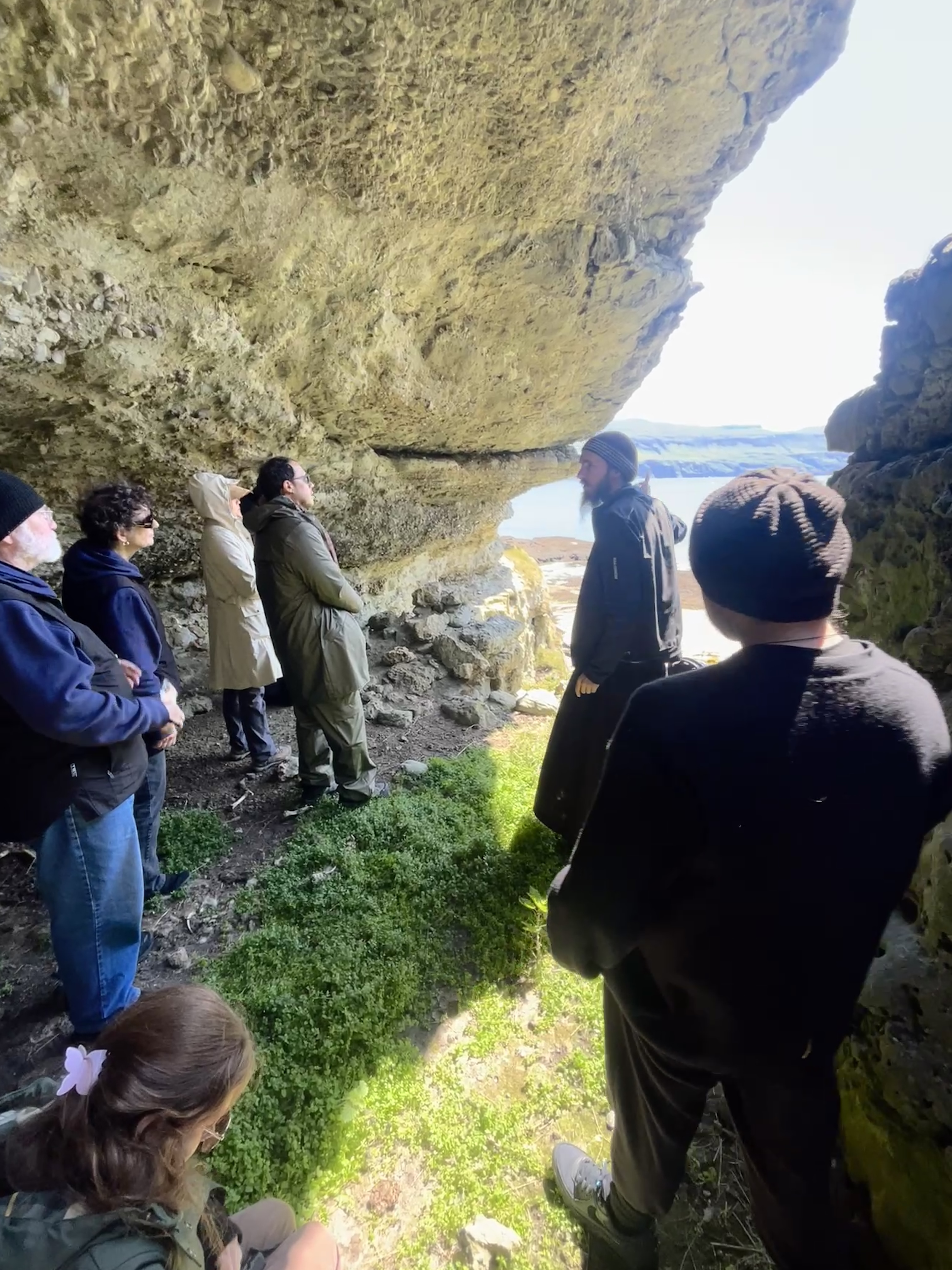
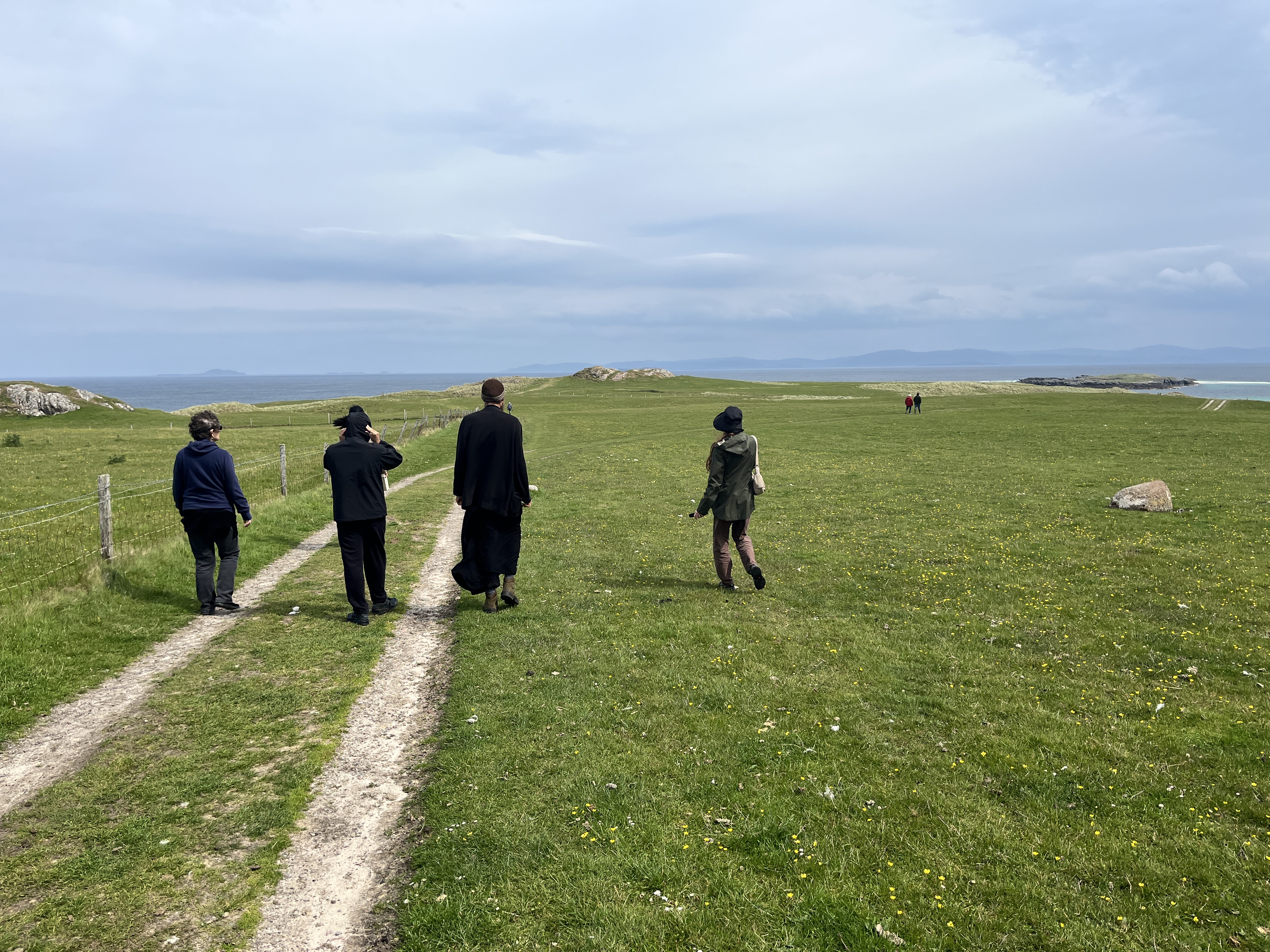
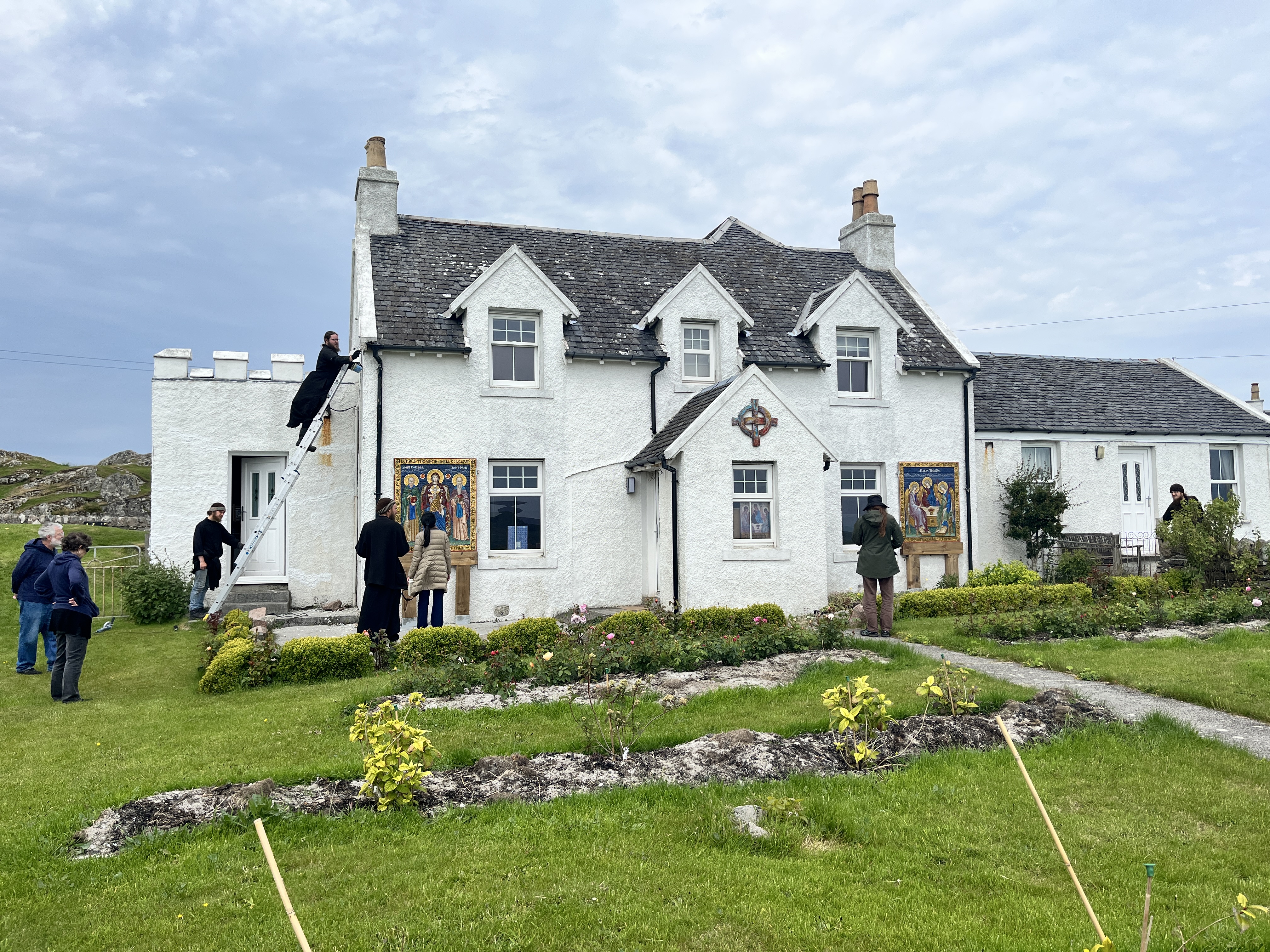
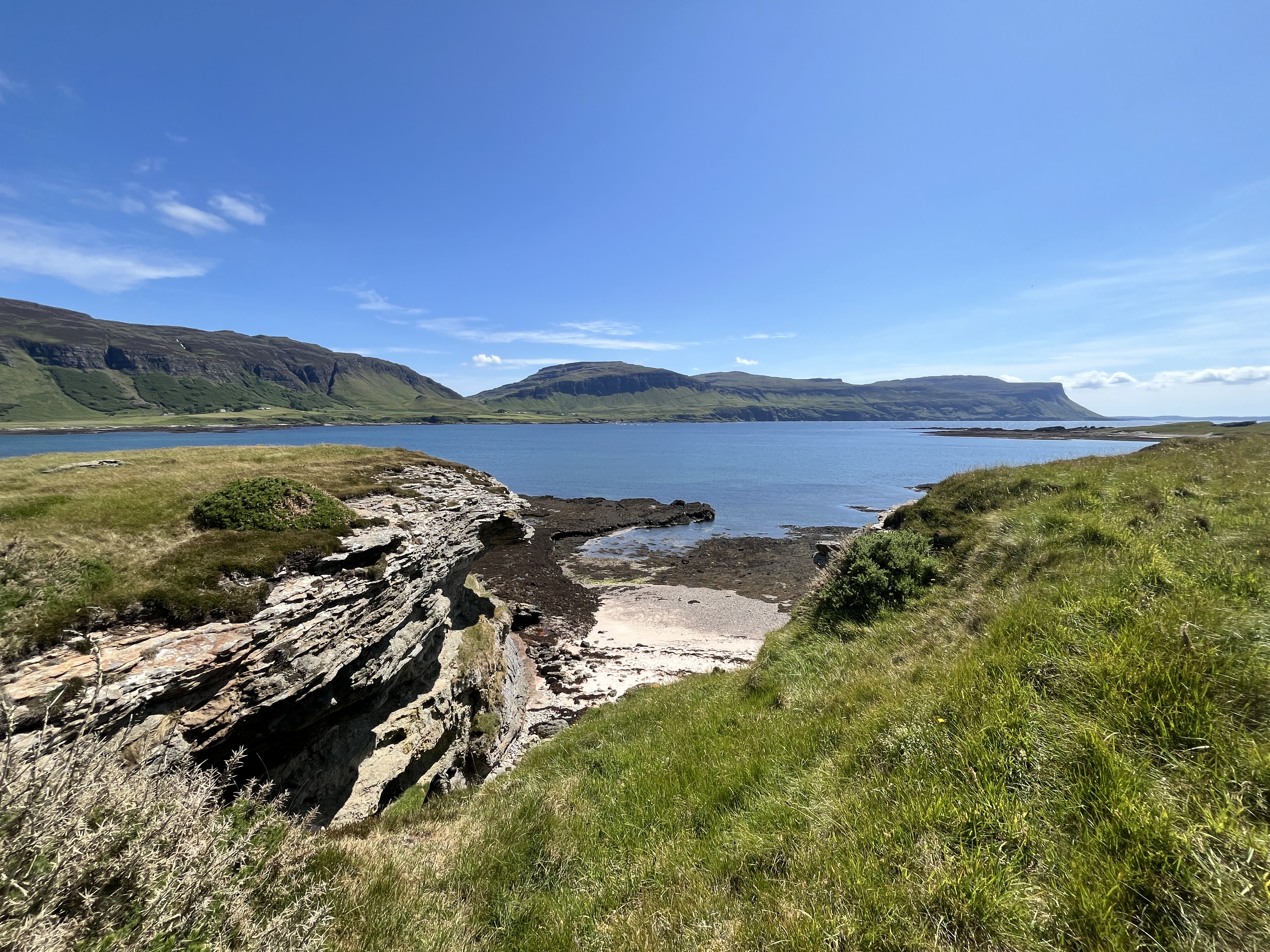
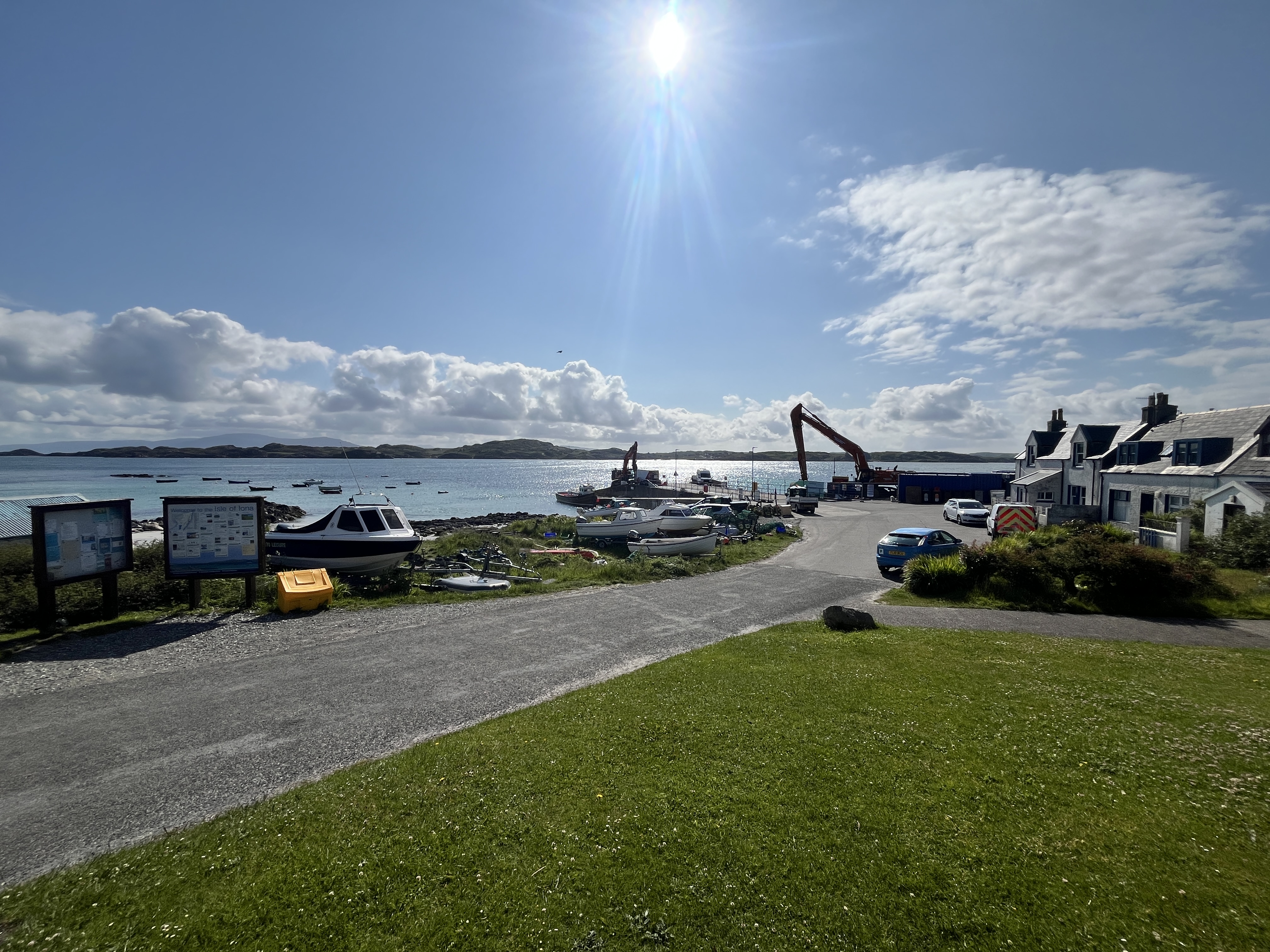
I just got back from a two week pilgrimage in the west Scottish Isles of Mull and Iona hosted by Father Seraphim Aldea and the blessed monks and nuns at the Monastery of All Celtic Saints. We followed the path of the Celtic Saints like Saint Columba, Saint Ninian, Saint Kenneth and Saint Brenden across the islands to monasteries, caves, beaches and bays. The pilgrimage was full of holy places – Kilninian where Saint Ninian founded a well and church. Inch Kenneth with Saint Kenneth’s cave and the remnants of a monastery. Saint Oran’s church, the first place of Christian worship established on the island of Iona built in the late 6th century. Saint Columba’s bay where Saint Columba landed with his monks as he fled Ireland in repentance. I was struck by the character of each place, they were not regular old beaches, churches or caves, nor were they out of place. Each place had its own presence that was special, set apart, holy that united the creation around it. Prayer was different in each place, to pray in Saint Oran’s chapel found the presence of Saint Oran, where prayer in Saint Kenneth’s cave found the presence of Saint Kenneth. The saints work and prayer has united heaven and earth, drawing pilgrims for fourteen centuries.
The holiness of such places is naturally creative simply by being holy. To set something apart is to create an order like the different holy places of Solomon’s temple – the common place of the outer court surrounded the holy place of the temple which was next to the Holy of Holies creating an order of common to holy to most holy. The Holy of Holies is where God’s glory dwelled between the Cherubim upon the Ark of the Covenant. If the outer court was between the holy place and the Holy of Holies, it would be out of order, disordered. Saint Brendan’s isle showed the same order of holiness – the island was set apart from the main land, then the monastery was set apart on the island and finally Saint Brendan’s cell was over a hill further set apart from the monastery.
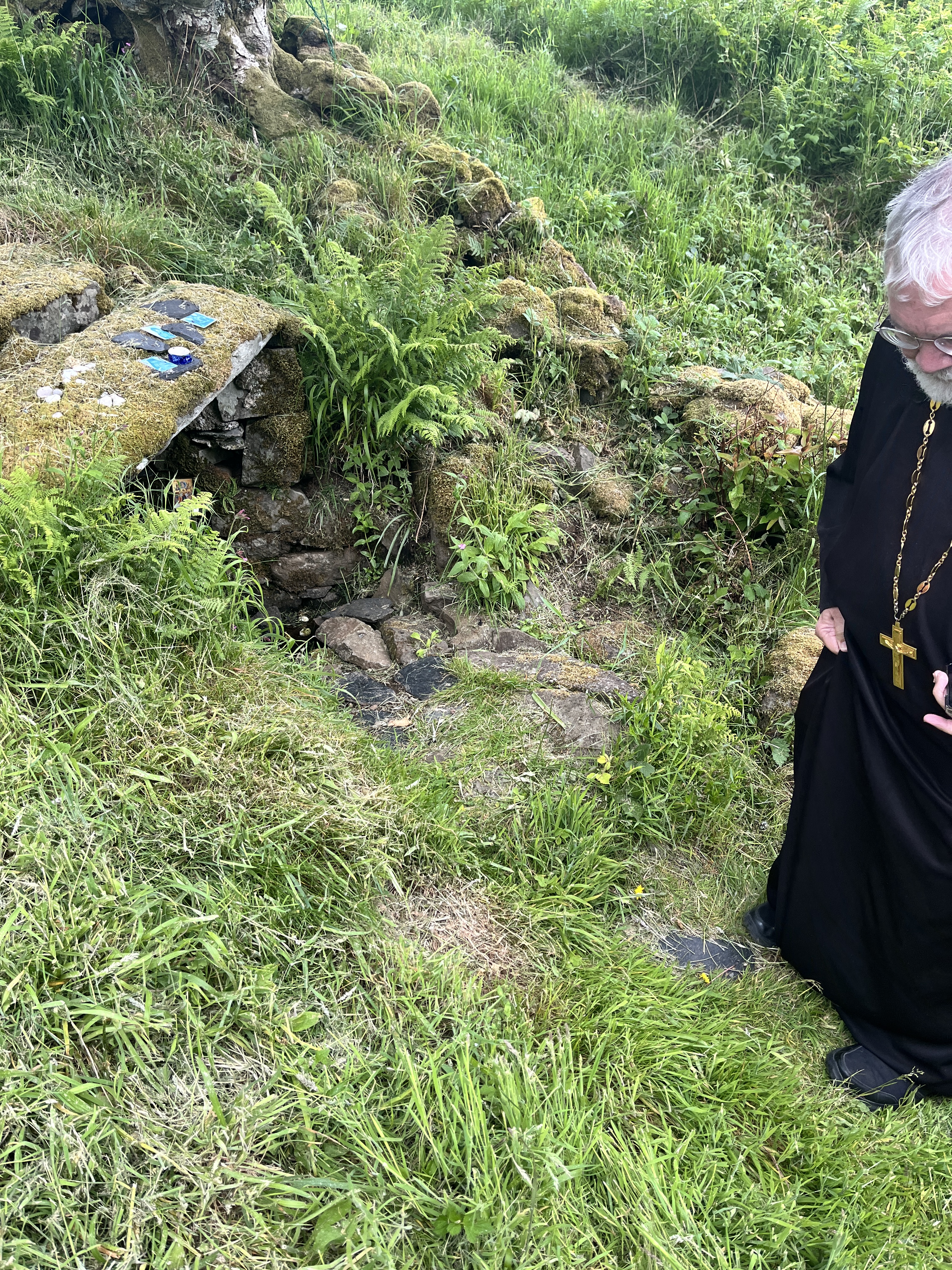
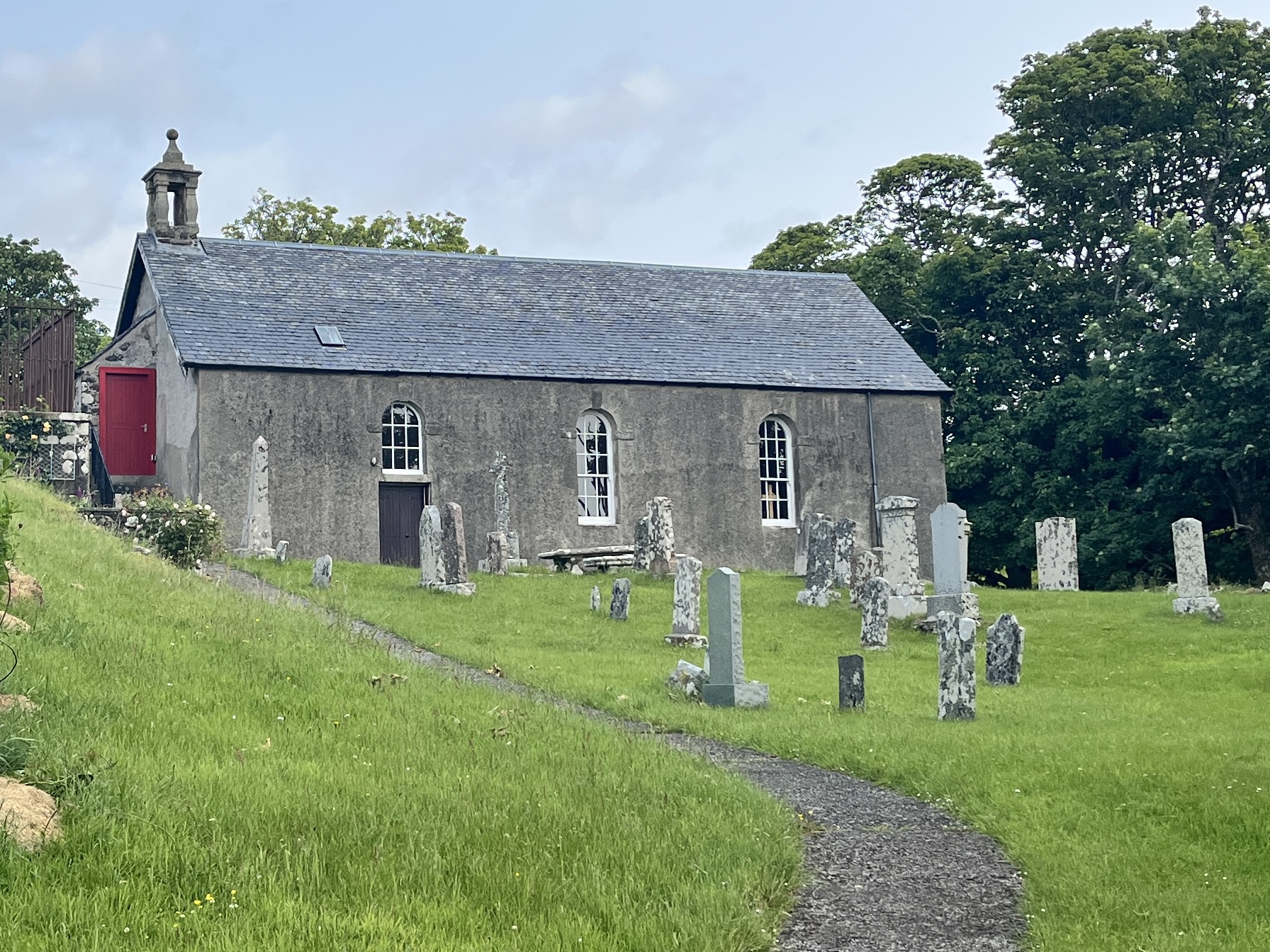
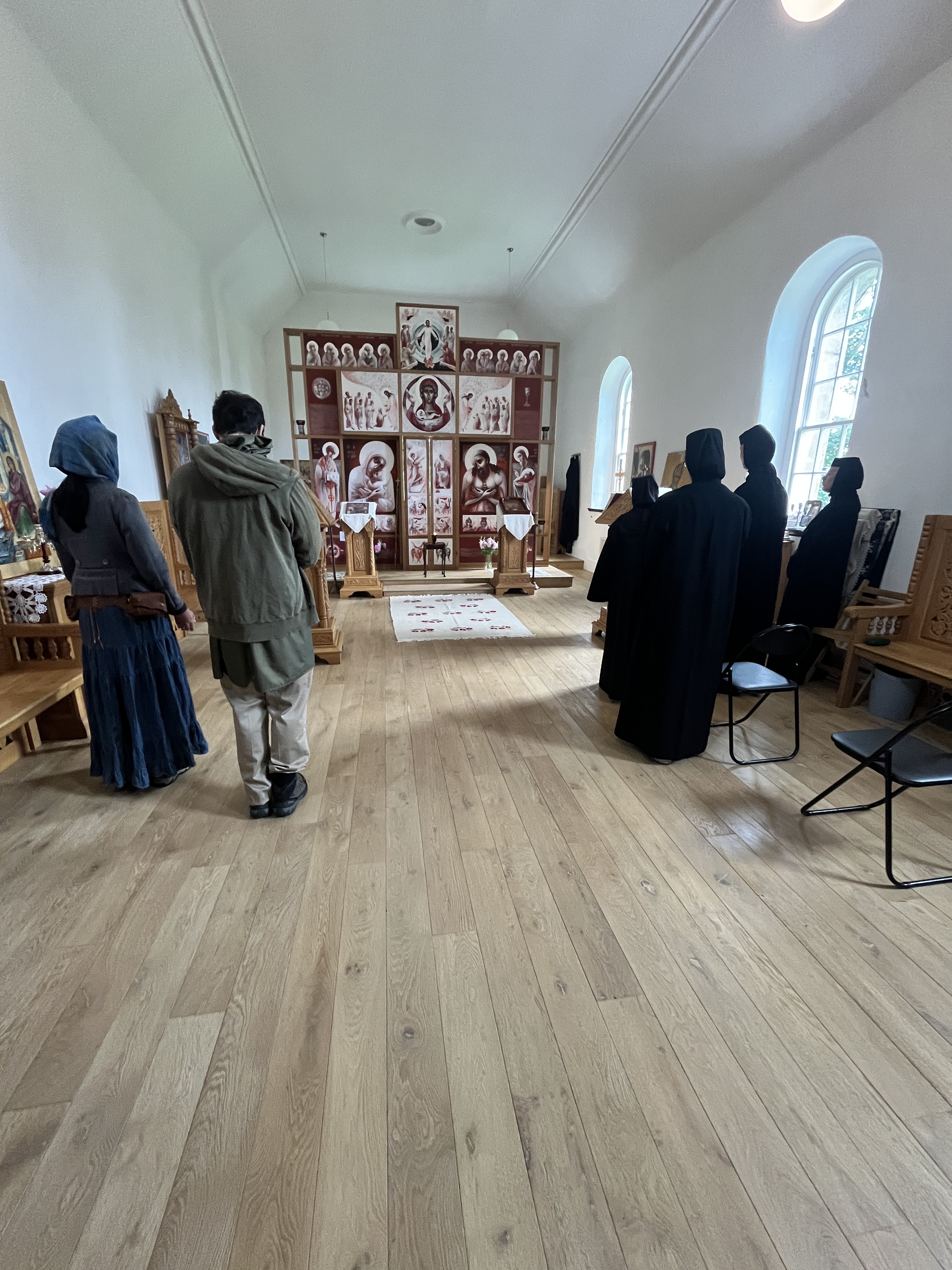
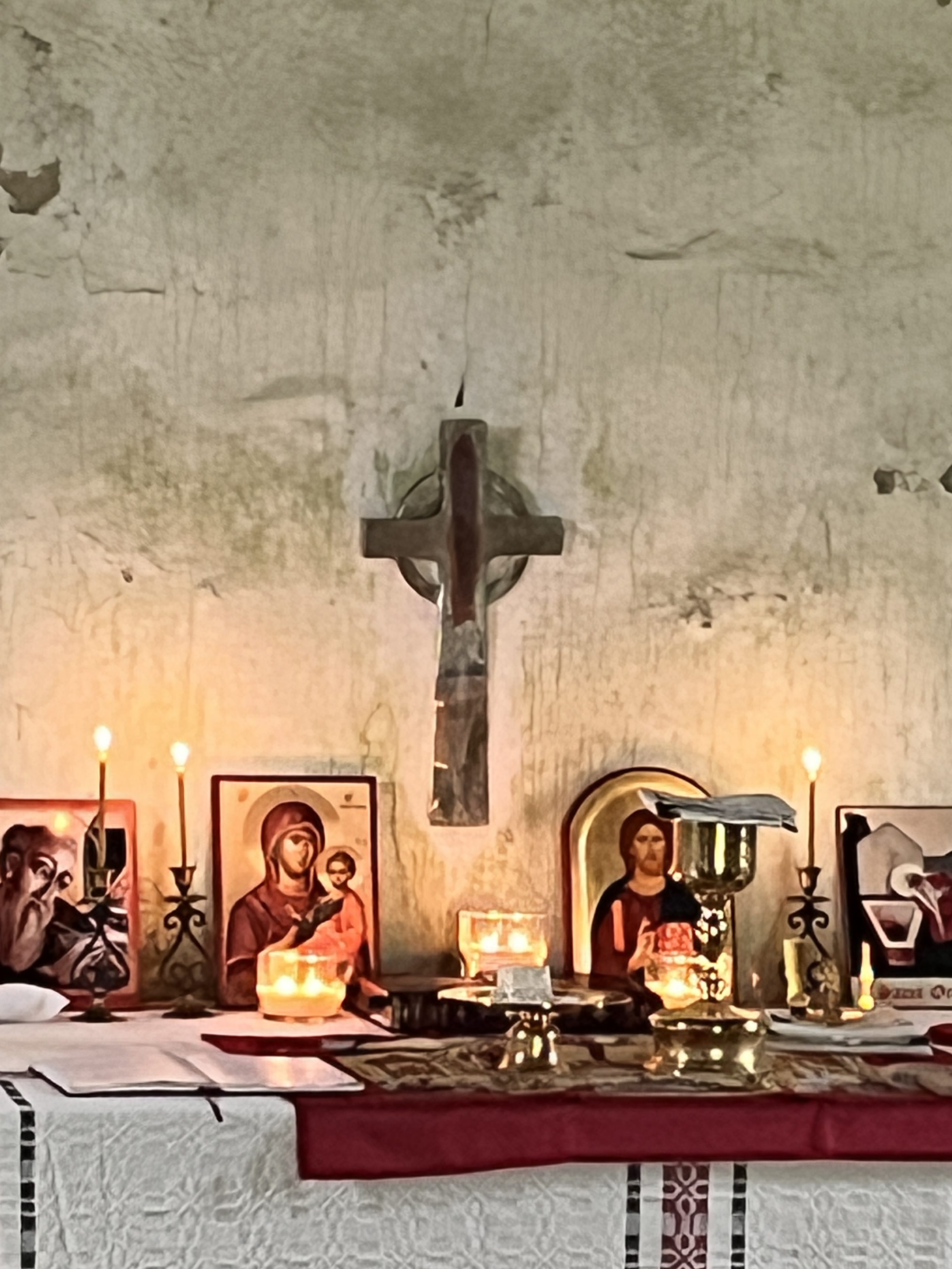
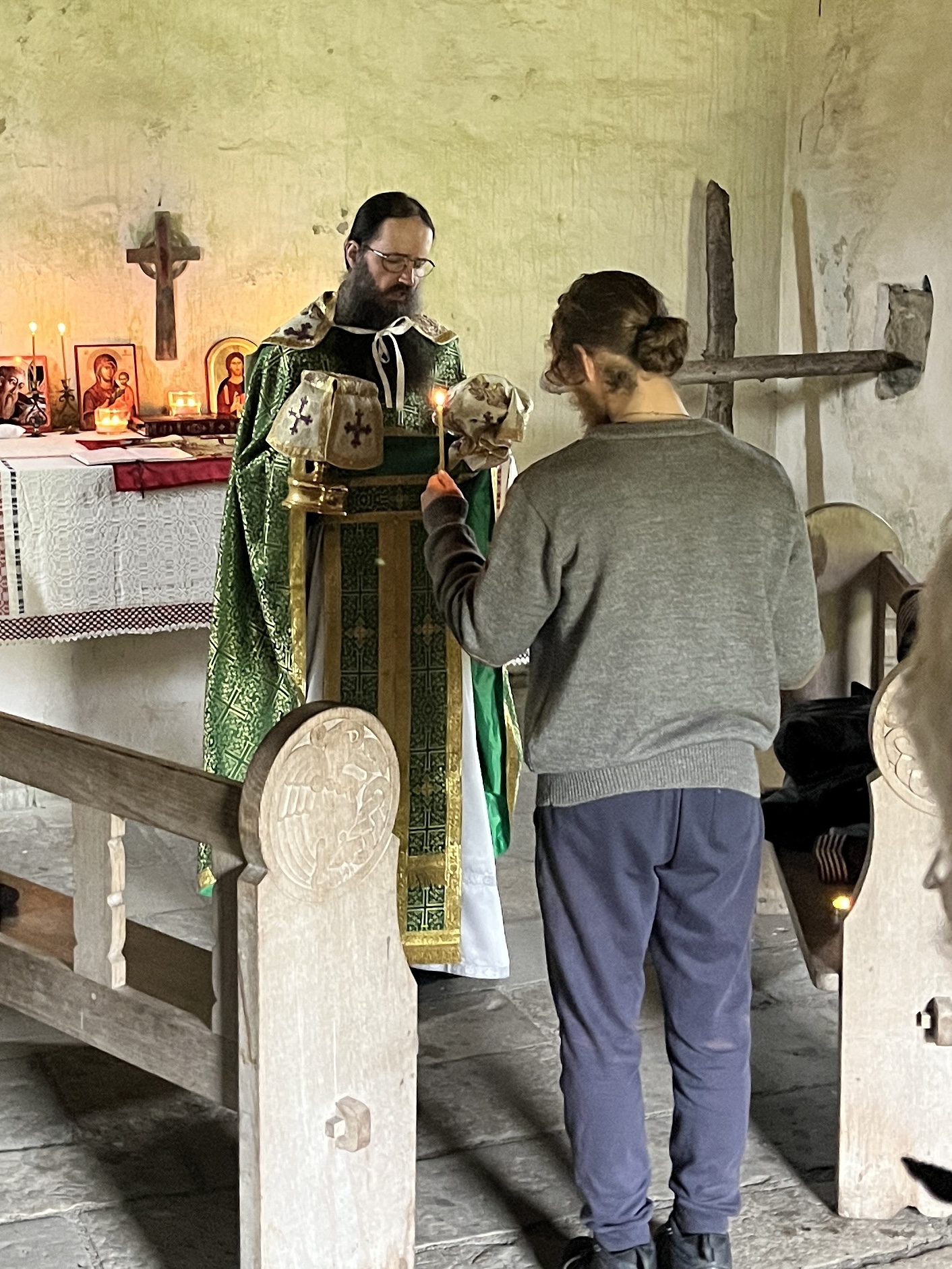
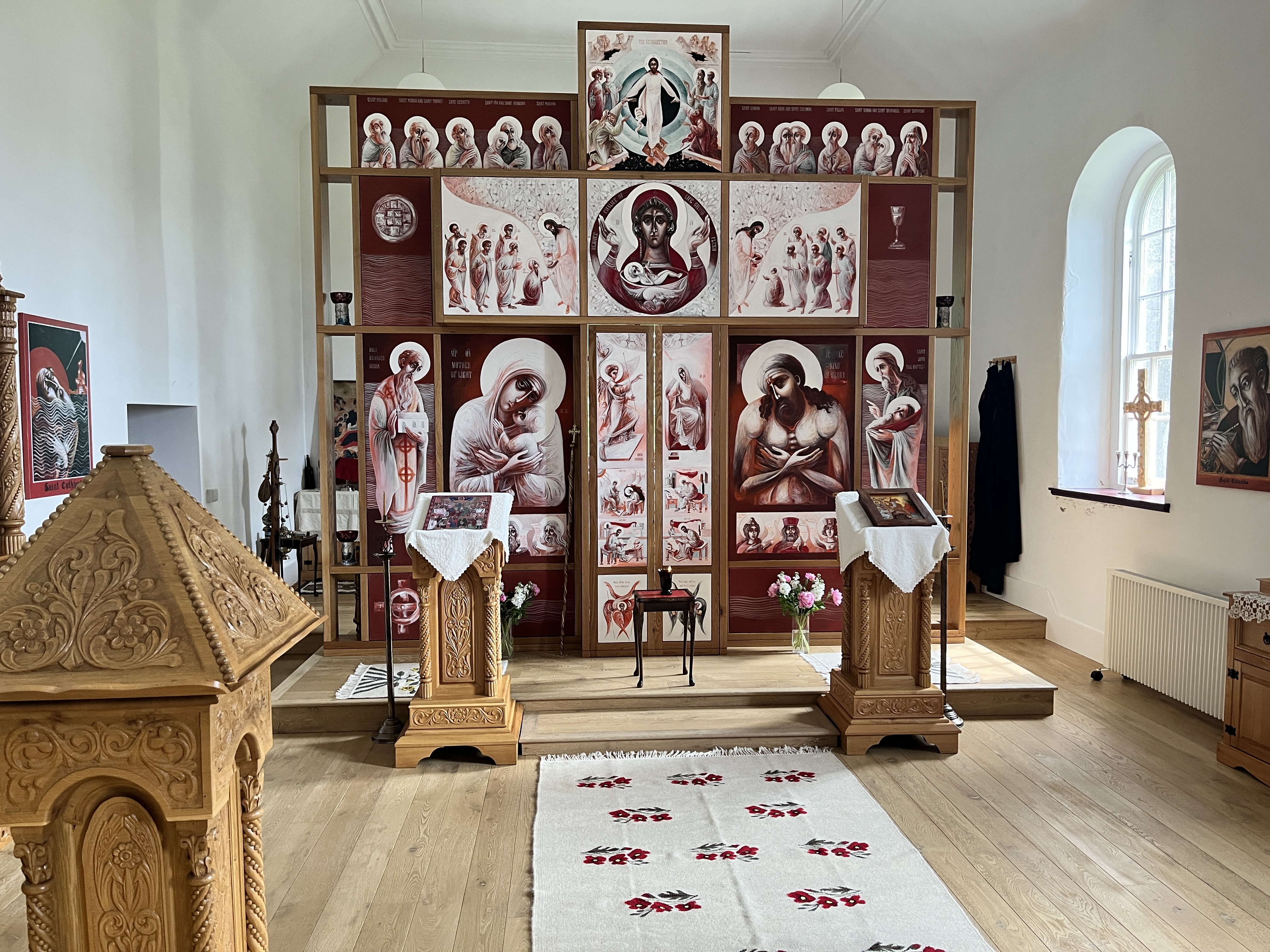
The first place we visited was Kilninian with Saint Ninian’s well and church. Saint Ninian came to Mull in the early 5th Century. Father Seraphim and the community has brought the formerly abandoned church at Kilninian back to life, continuing the celebration of the liturgy that Saint Ninian celebrated. At Saint Ninian’s well we sang a hymn and shared its blessed water together.
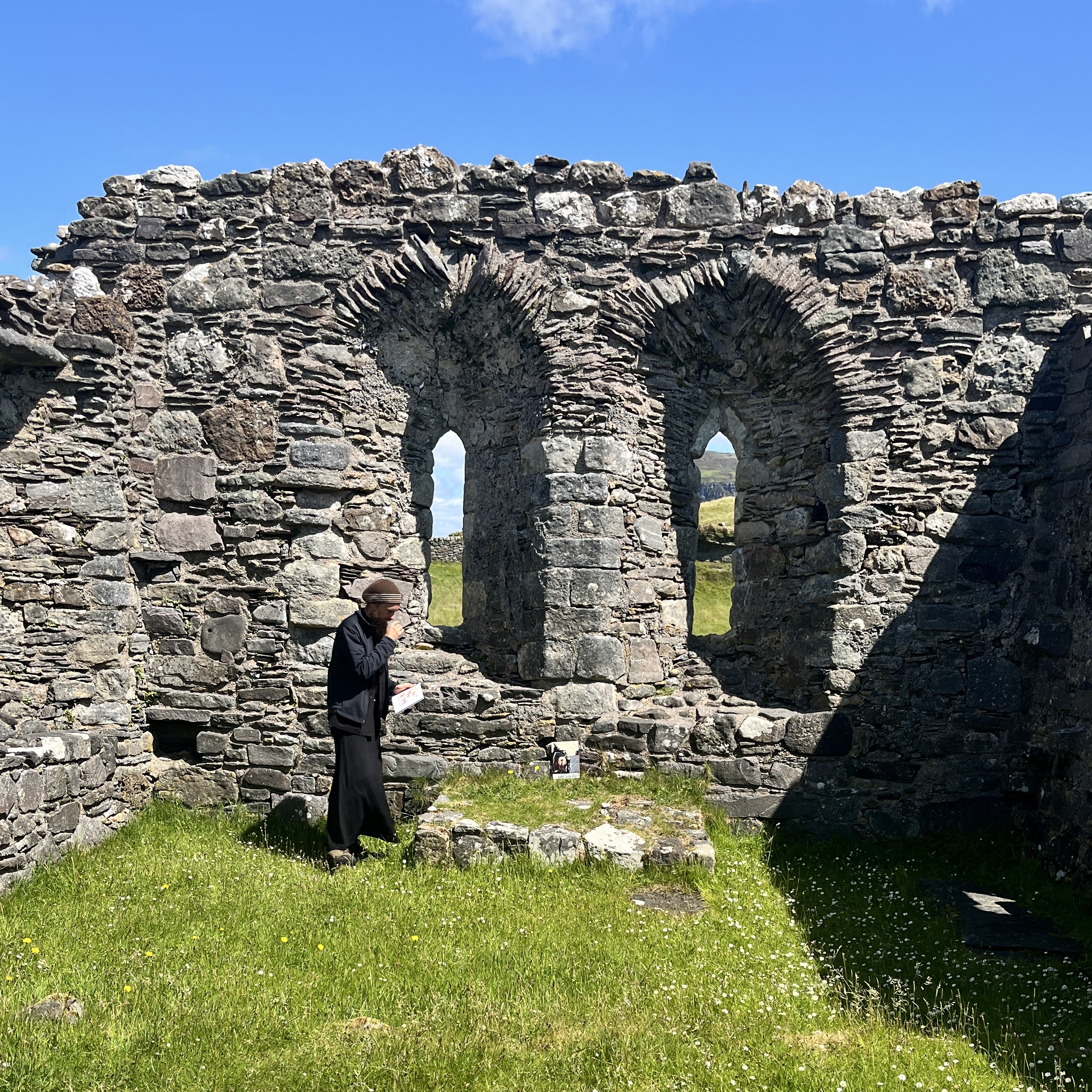
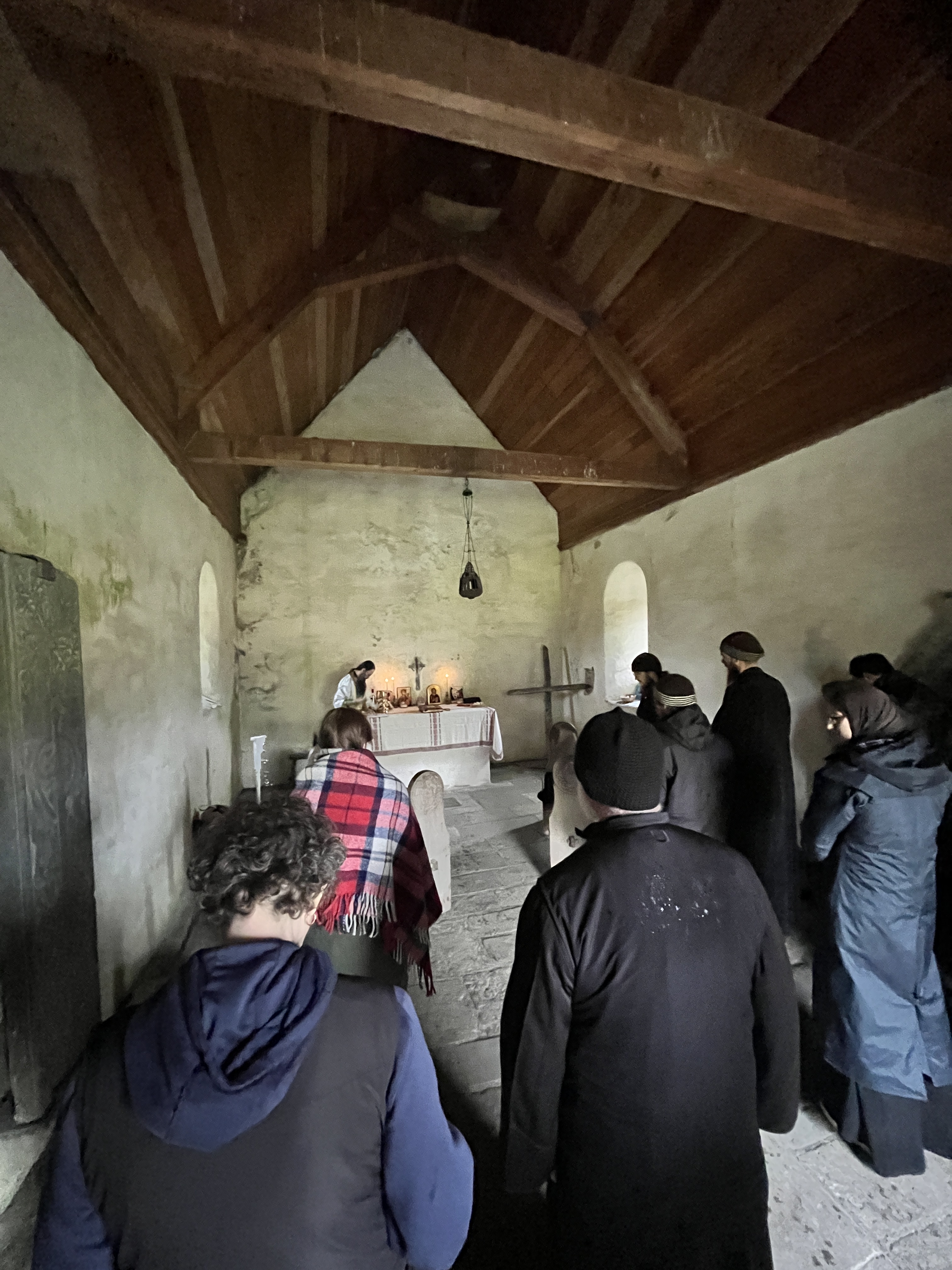
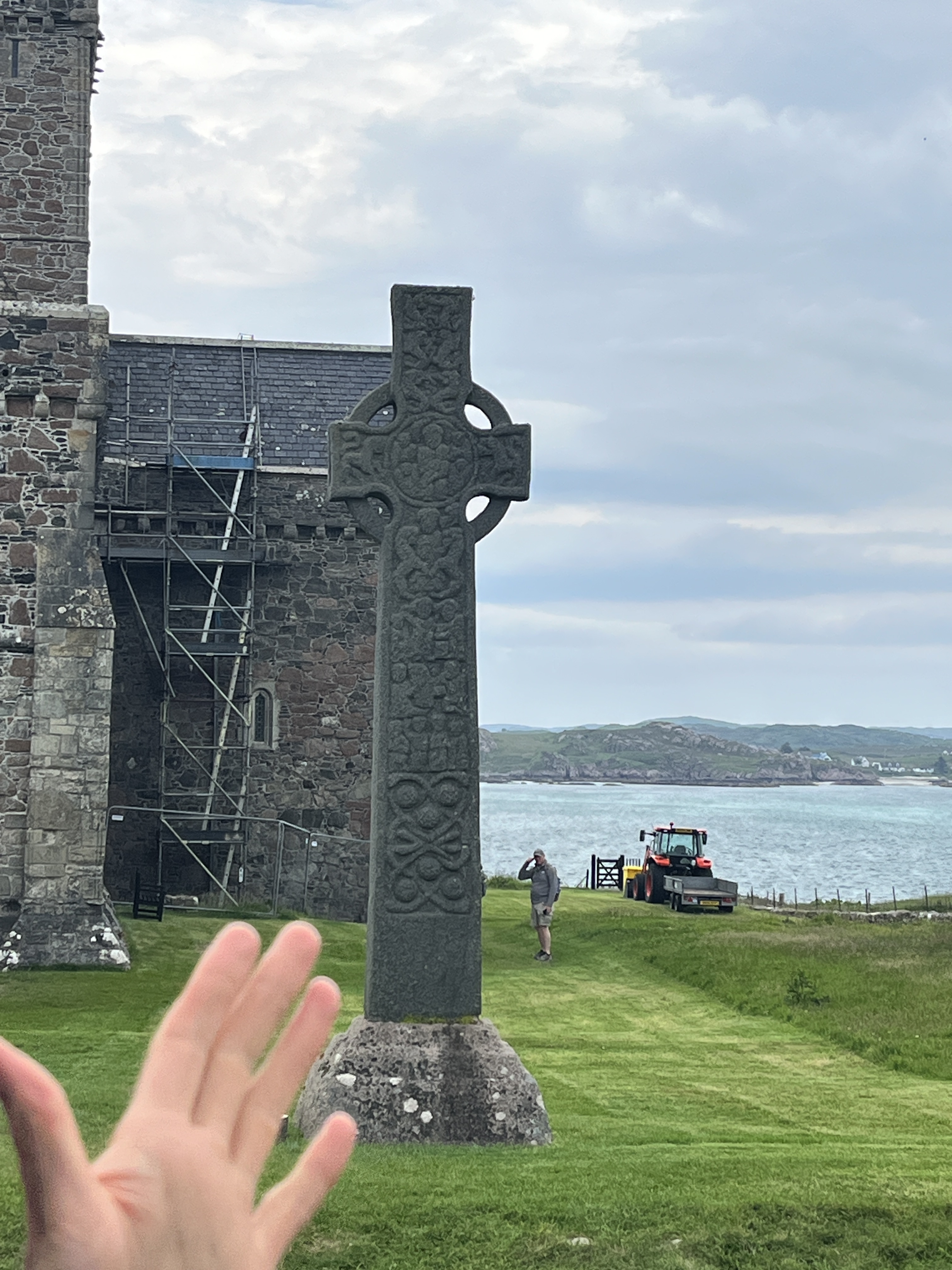
From Mull we took a short ferry ride to Iona. Saint Columba came to Iona from Ireland in the 560s as a place of his repentance. The island tells a story of darkness and redemption in multiple cycles between the coming of the monks and their eventual disappearance after the viking raids. The highlight of the pilgrimage for me was liturgy in Saint Oran’s chapel on Iona. When Saint Columba landed on Iona they tried to build a church three times on the island but every time the foundation gave out. One night in a dream a demon told Saint Columba that Iona had been founded on human sacrifice and nothing would stand on Iona without a human sacrifice. Today you can still climb Dun i, the highest spot on Iona where such sacrifices were offered before Saint Columba came. After the saint told his fellow monks about his dream, the oldest of the monks Saint Oran offered to be buried alive that a church could be built on Iona. Here it stands, the same place Saint Oran was buried. The liturgy in Saint Oran’s chapel was special, it had a substance to it, as the relics of the altar are Saint Oran himself. The darkness of the island’s past was sanctified in a way that calls back to Christ upon the cross in the most literal sense. I returned many times to pray in Saint Oran’s, it has a stable peace about it that has stood for 1400 years.
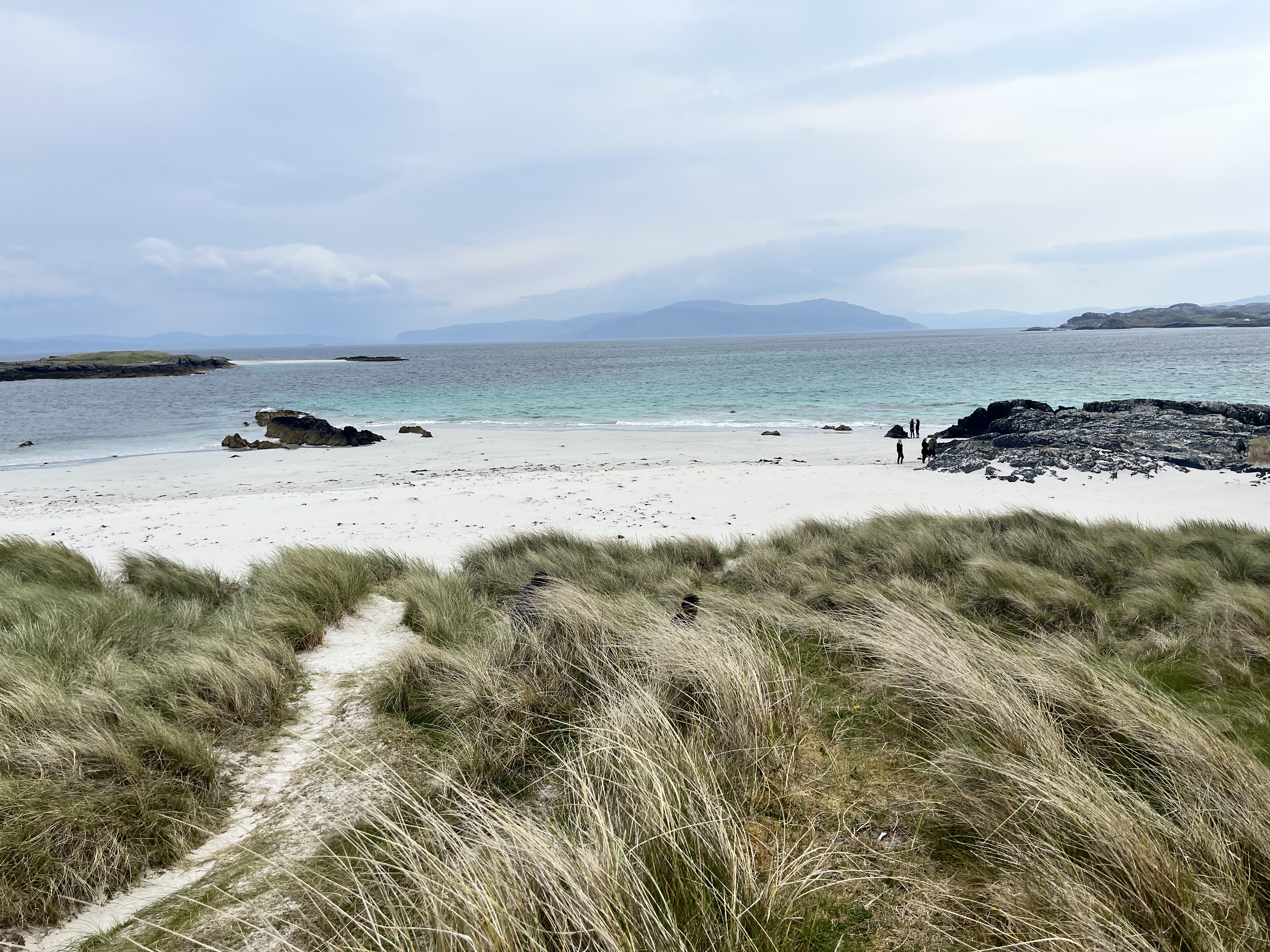
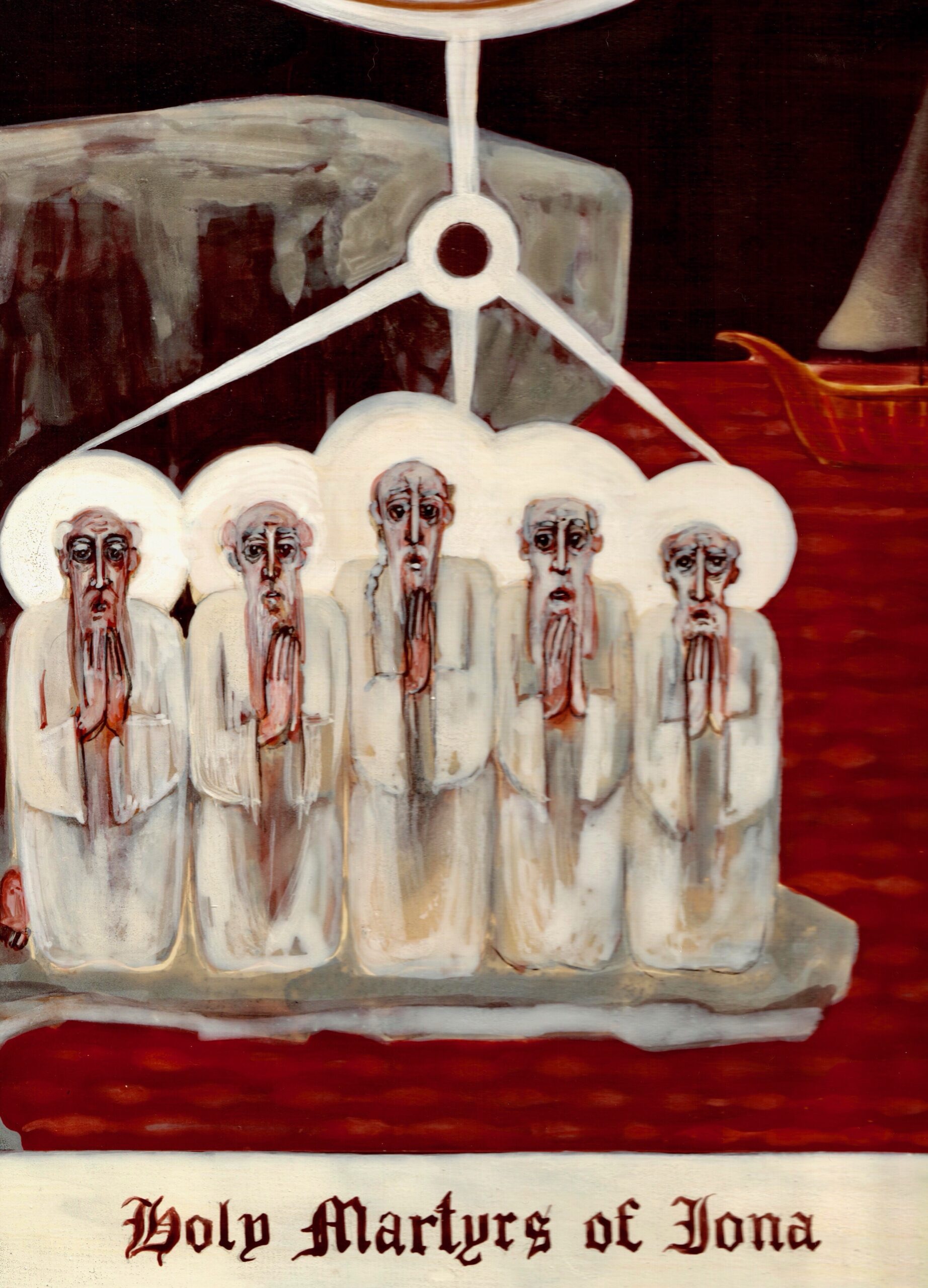
On the fifth day on Iona we walked to the north end of the Island to the White Strand of the Monks. Viking raiders from Scandinavia would come to Iona periodically to raid the monastery of its treasures. As the monks spotted the vikings coming from this beach, some would stay to be martyred as the others would take the most precious relics and treasures of the monastery and hide in tidal caves on the south side of the island. Icons of the white strand show a beach covered in red blood, sanctifying the sacrifice of these saints.
They wandered about in sheepskins and goatskins, being destitute, afflicted, tormented— of whom the world was not worthy. They wandered in deserts and mountains, in dens and caves of the earth.
– Hebrews 11:38
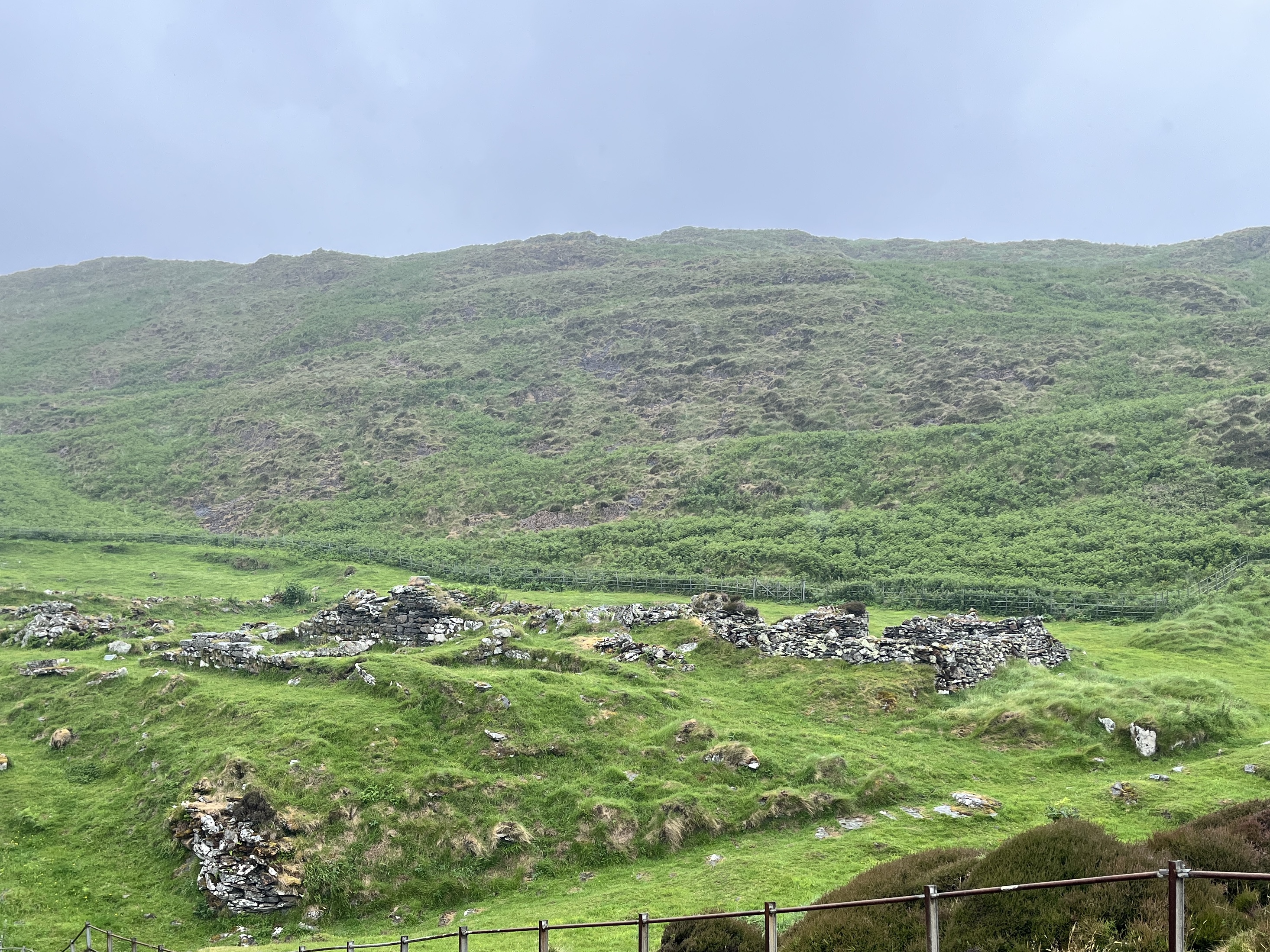
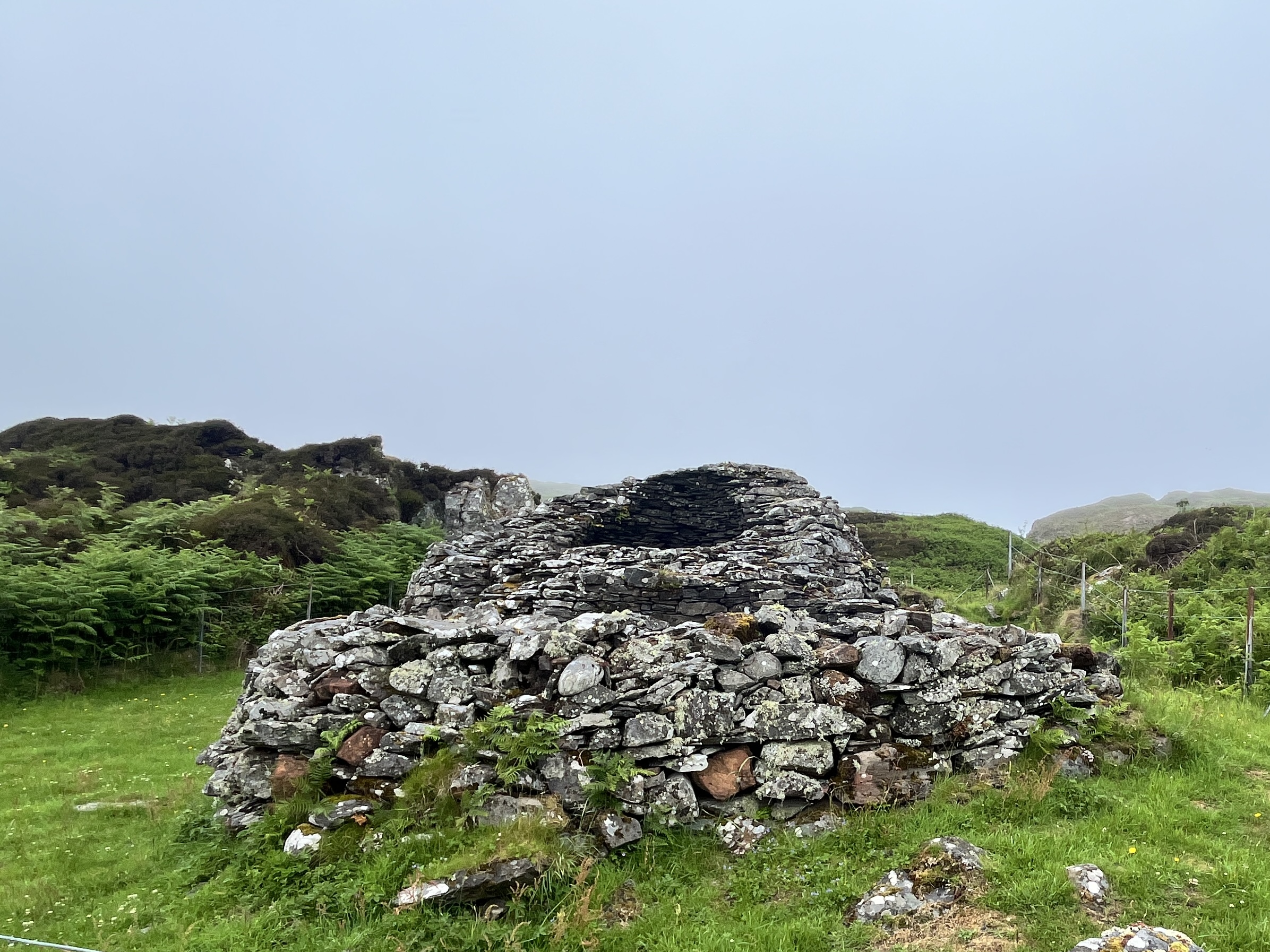
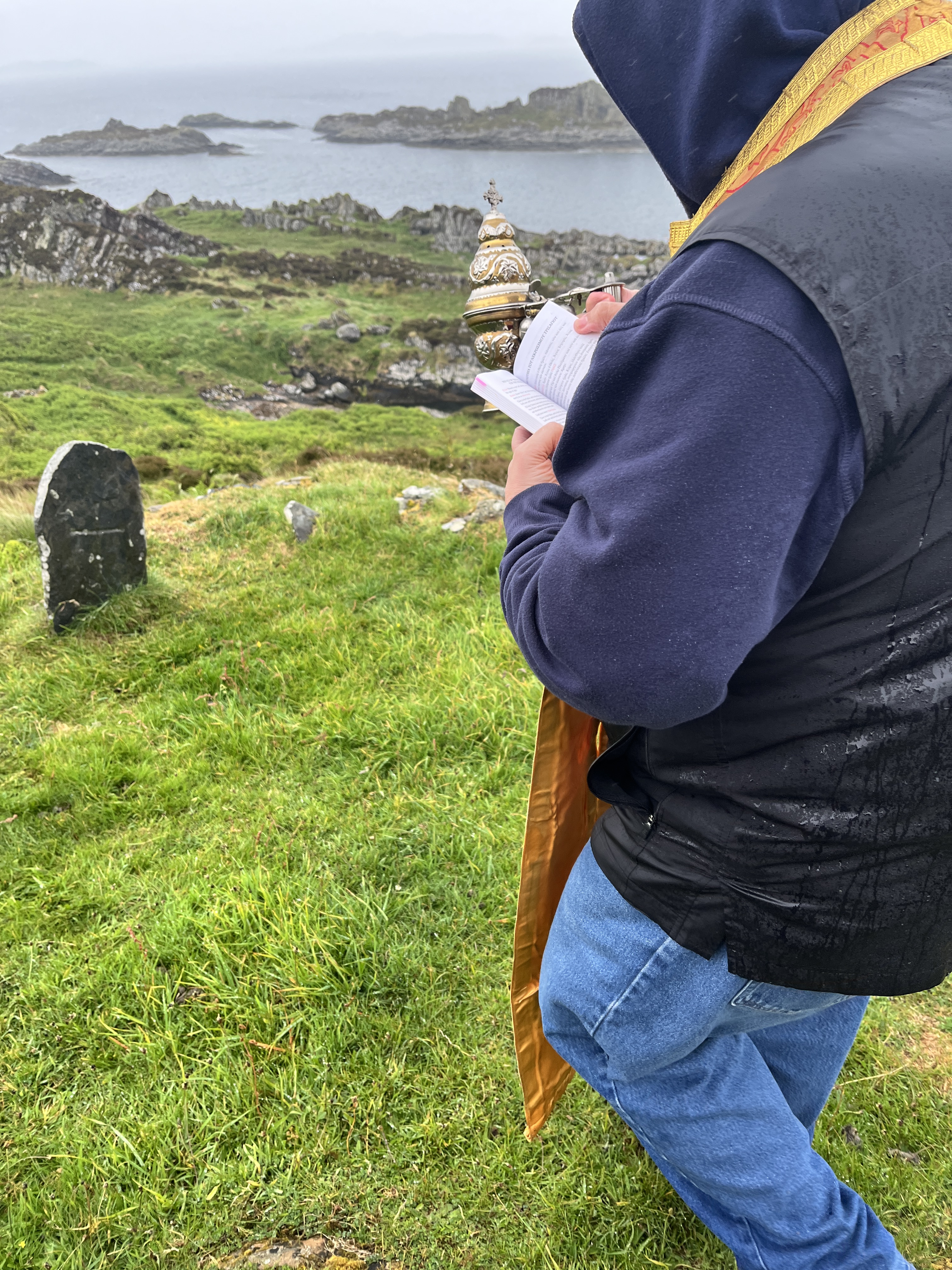
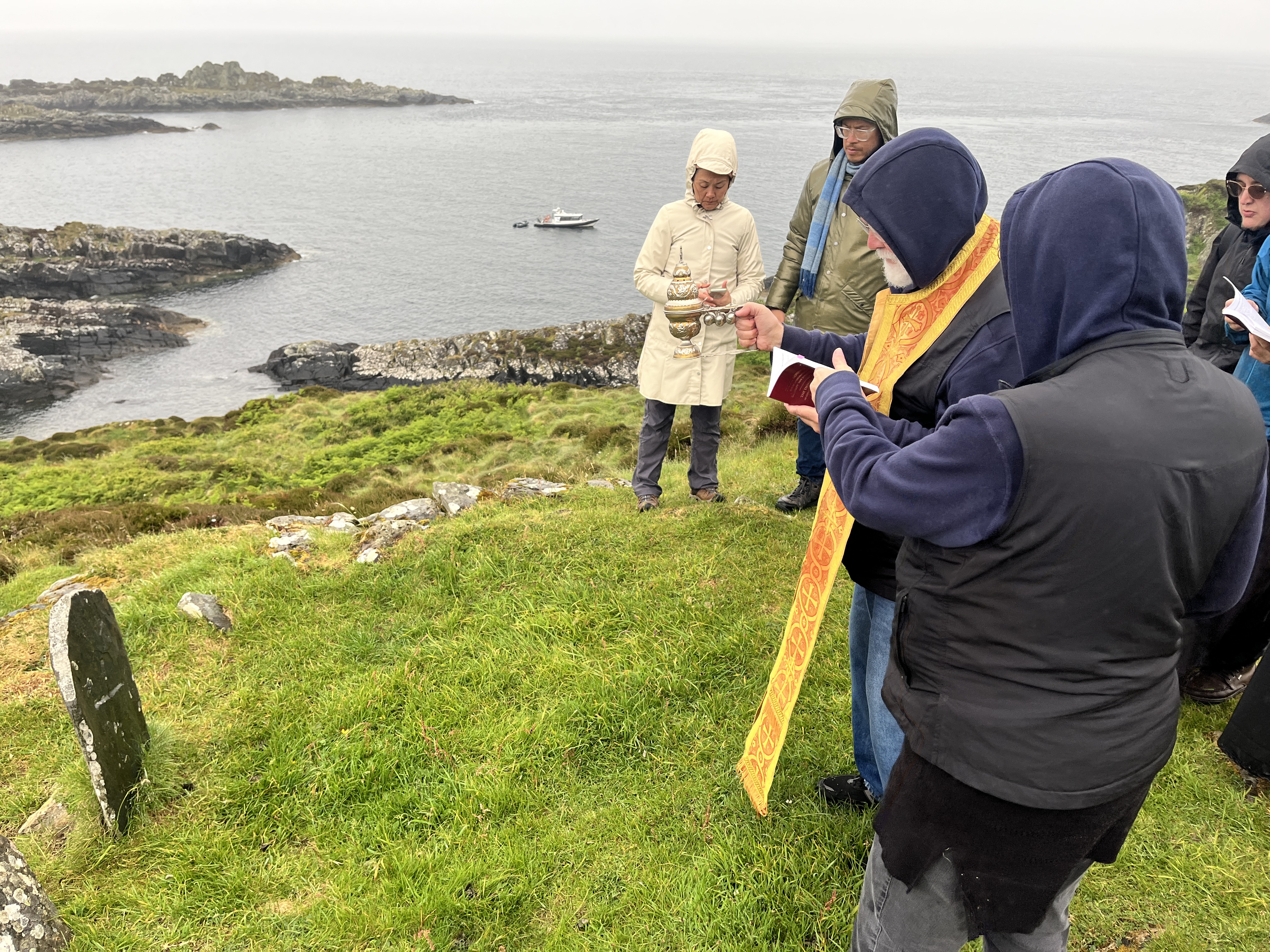
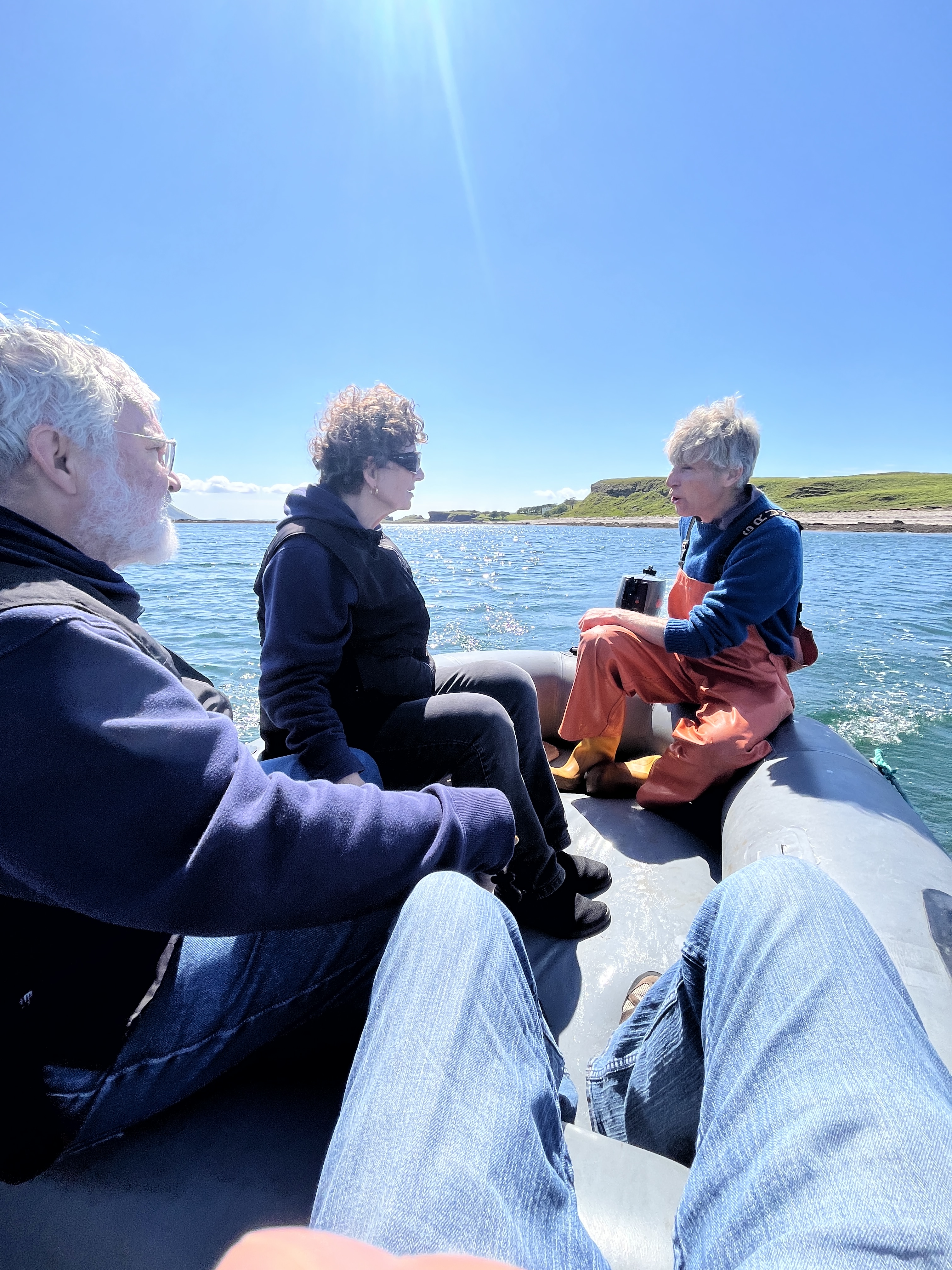
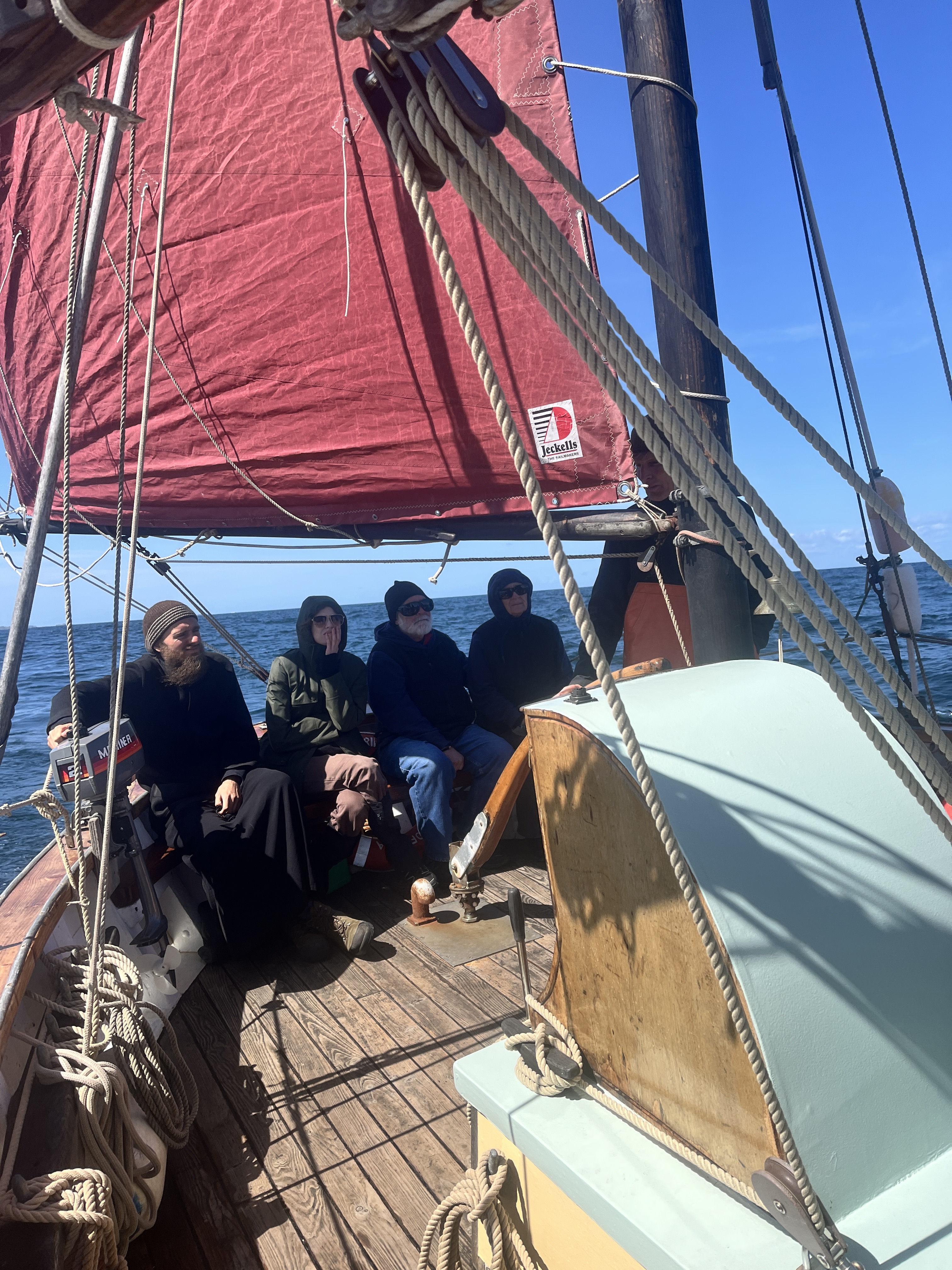
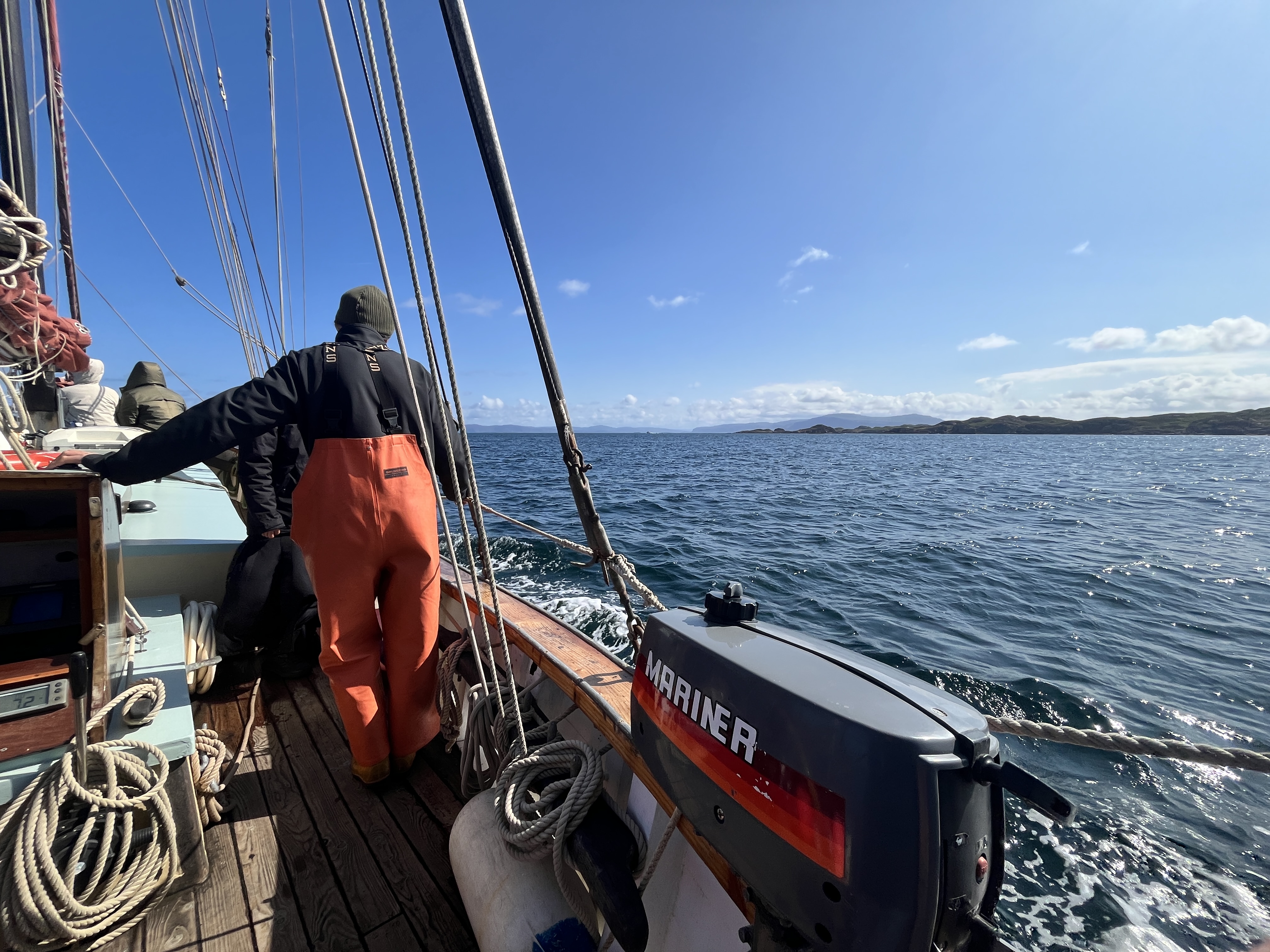
We took a speed boat to Saint Brendans Isle where the island is dotted with the famous “beehive” monastic cells. These cells were built stone upon stone without mortar and have stood since the late 6th century. Saint Brendan’s cell is over the hill from the abbey. Above the abbey is the grave of Saint Columba’s mother Eithne where we did a memorial service lead by Father David. It was my first time doing a memorial at a holy site as the rain fell on us. Like every service on the pilgrimage the memorial blended into the place, joining the thousands of memorials preformed there throughout the centuries.
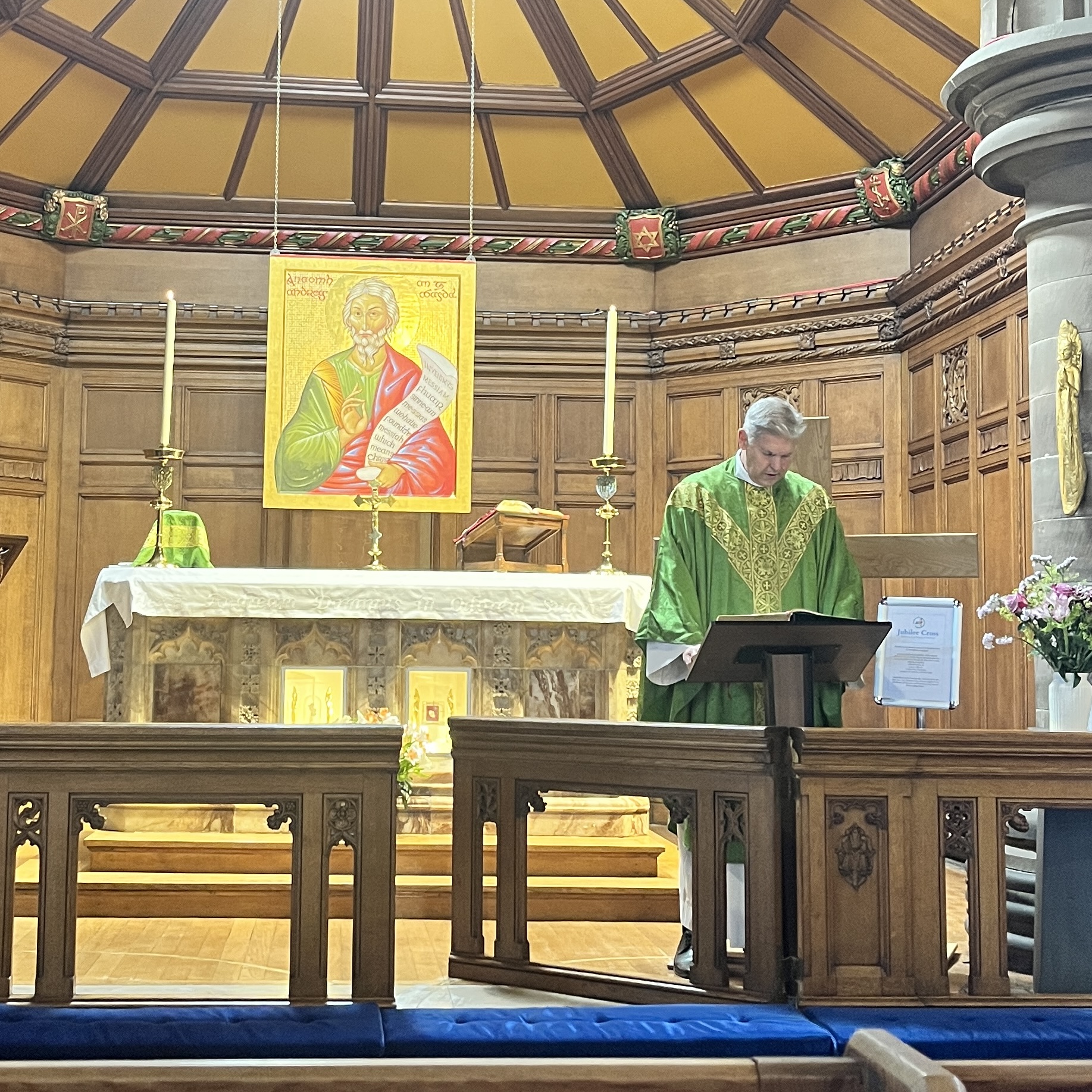
Before I headed back to the states I spent a few days in Edinburgh. On Thursday I visited the relics of Saint Andrew in Saint Mary’s Cathedral. As I was praying three Catholic priests from Boston went into the altar and did a mass. God knows. After the Mass we exchanged names and addresses so I can look them up when I get back to seminary in Boston in August.
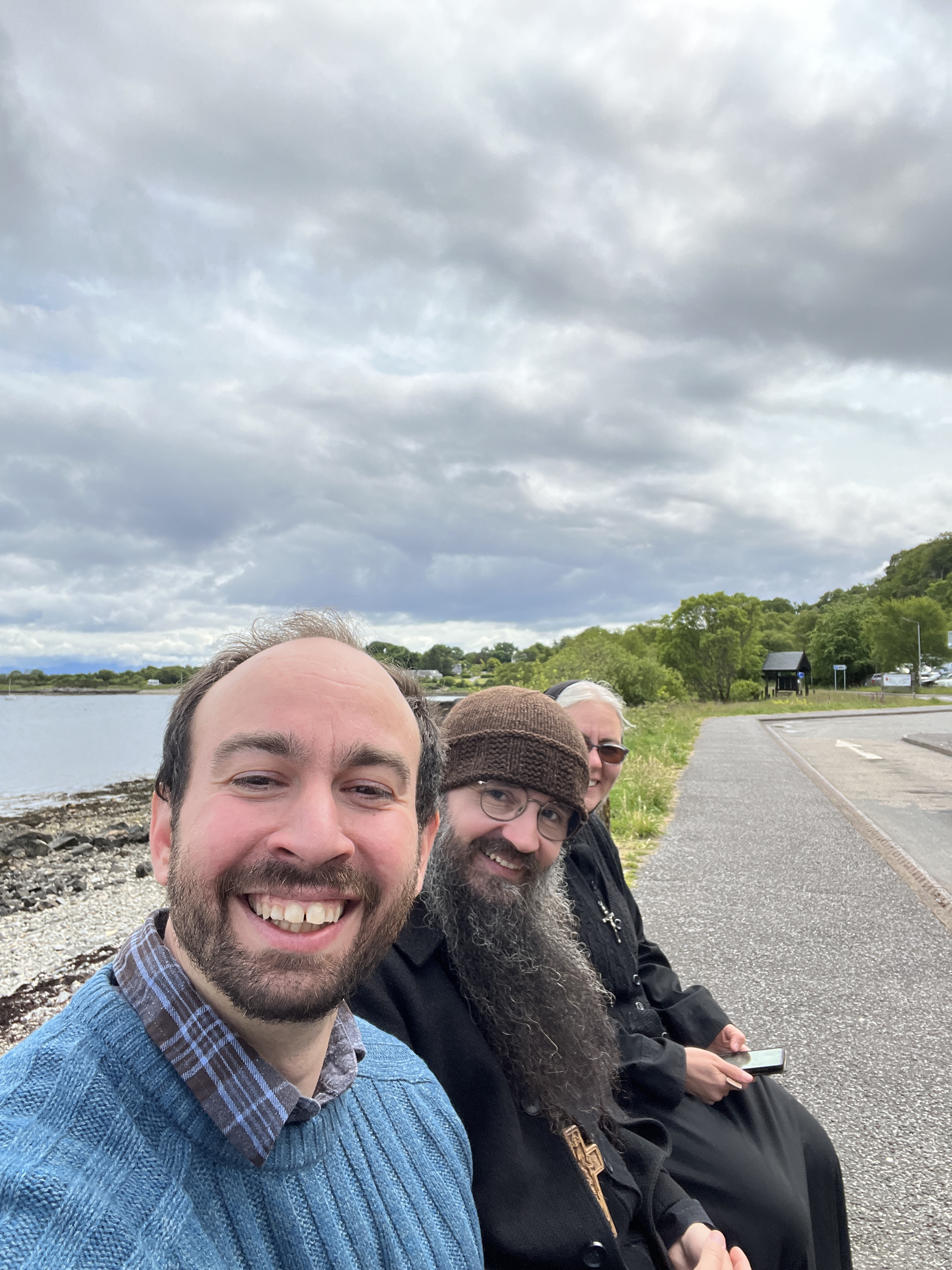
And here is a picture of Mother Ita, Father Seraphim and me.

 Cycles of Newness
Leave a reply to Saint Thaney, Innocence and The Buried Heart – Cycles of Newness Cancel reply