
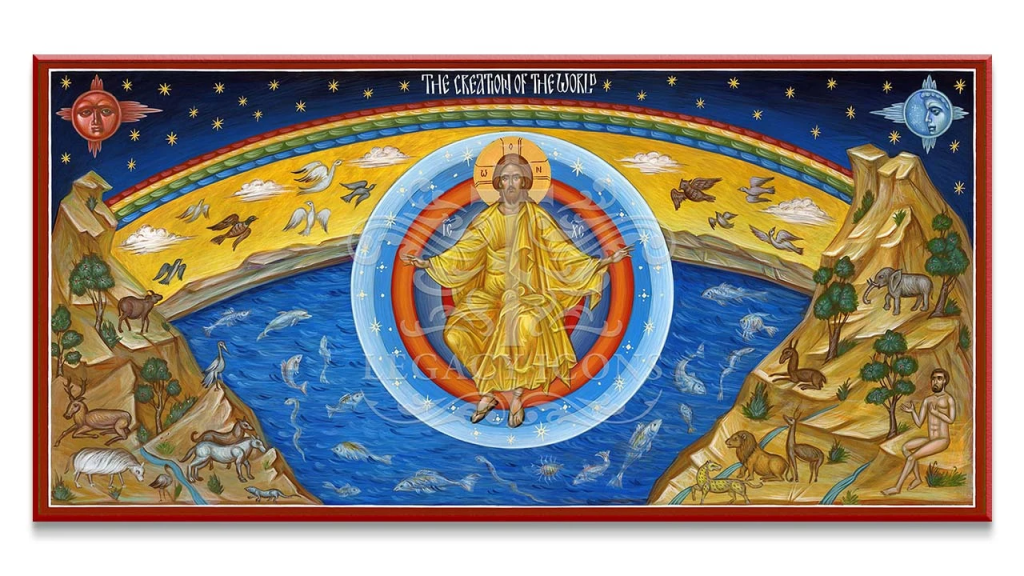
For He is everywhere present and filling all things.
~ Liturgy of St. John Chrysostom
Today I was reading Zizioulas’ Being as Communion and stumbled across a footnote about δόξα — glory. Doxa is one of those words that underwent a transformation when it encountered God, much like πρόσωπον (prosopon) did in the fourth century.
In ancient Greek, doxa meant “appearance, opinion, or glory” — it denoted the outward appearance of something, as distinguished from its inner being. Inner being was where the truth of a thing resided, in its essence. In Platonism, doxa was contrasted with ἀλήθεια (aletheia), truth. Aletheia was the essence of a thing, the truth of what it really was. Doxa was mere appearance, hollow of substance.
When the Jews translated the Hebrew scriptures into Greek — the Septuagint — they elevated doxa and filled it with God. Wherever God’s glory appeared in the text, the translators rendered it as God’s doxa. Suddenly doxa was no longer a word of empty appearances, for it now denoted the glory of the God who is truth. Doxology. Doxa was filled with essence and given an ontological weight it had never carried before. Plato’s appearance was filled with truth.
The same transformation happened with prosopon in the fourth century. Prosopon — from which we derive the English word person — was the mask that actors wore in Greek theater. Like doxa, the mask had no substance of its own; it only covered the true substance beneath. But Saint Athanasius and the Cappadocian Fathers — Saints Basil, Gregory of Nyssa, and Gregory of Nazianzus — took up prosopon to describe the persons of the Holy Trinity. God was three prosopa in one essence. And to give prosopon genuine substance, they made the term equivalent to ὑπόστασις (hypostasis), meaning “foundation” or “underlying reality.” The actor’s mask was now filled with God and became the very substance of personhood.
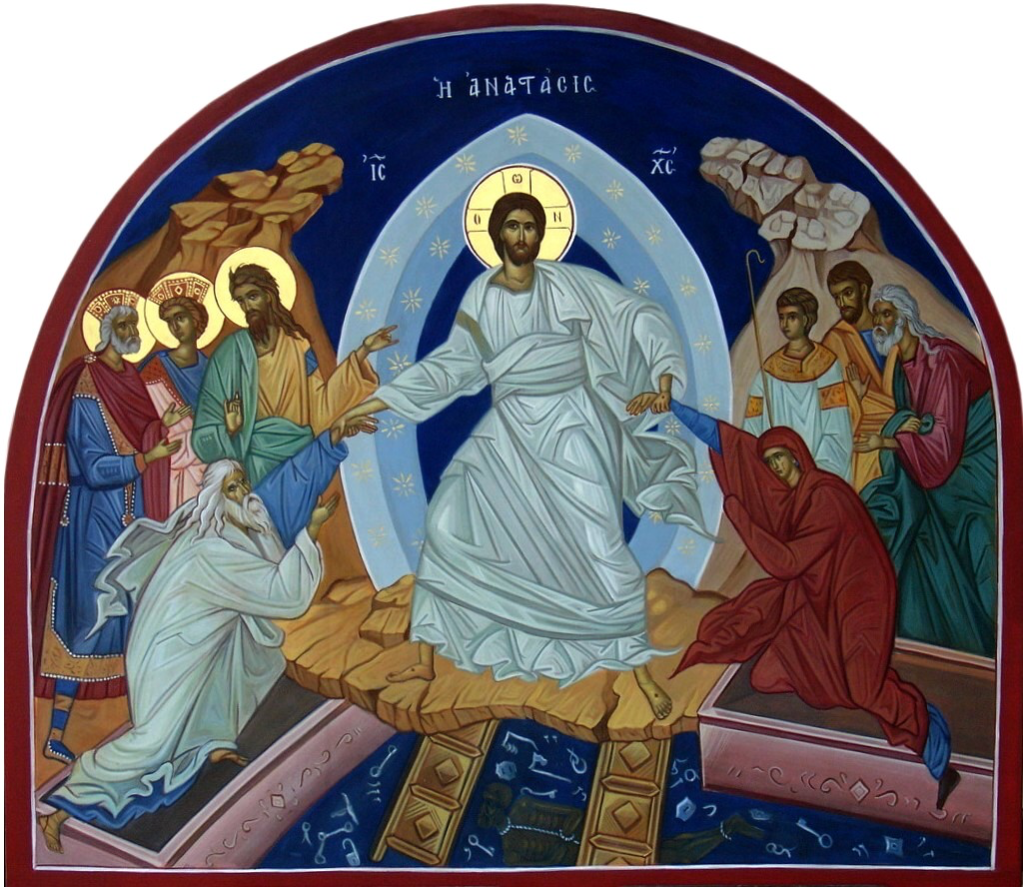
Both transformations — of doxa and of prosopon — are acts of incarnation: God filling the world with Himself. “For He is everywhere present and filling all things,” as we pray to the Holy Spirit at the opening of the Divine Liturgy. Even the word Incarnation itself began as something common, almost crude: en-flesh-ment. Christ, the Son of God, entered His own creation to redeem it. At His death, the veil of the Temple was torn in two, and God was loosed into the world — to give eternal substance to dust and broken masks. The sacred entered our profane, secular space, even as the religious authorities labored to keep God sealed up in temples and idols.
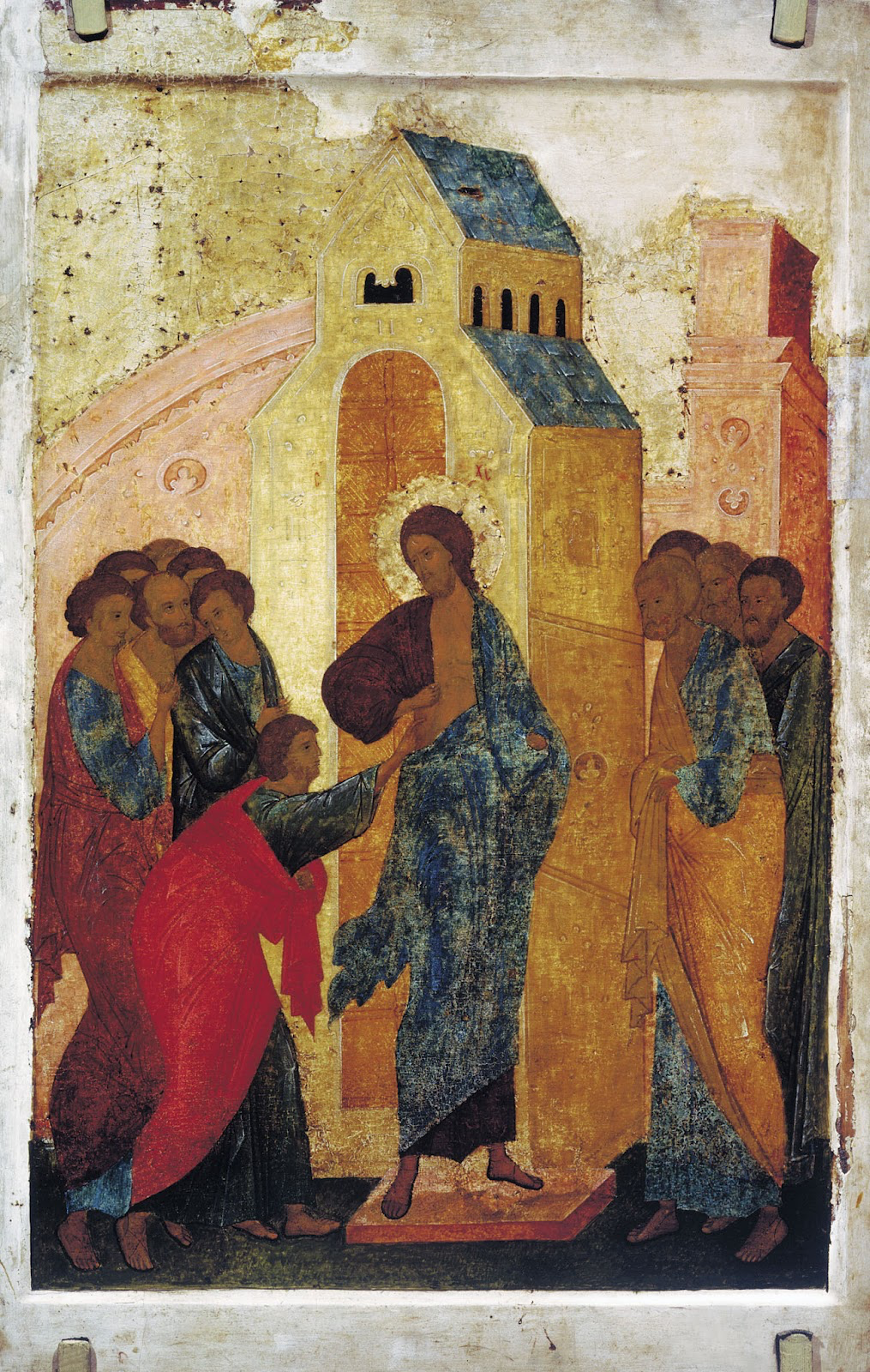
When the early Christians gathered to worship, they brought everything they had to share with one another. “They had all things in common” (Acts 2:44). In their gatherings they entered the Kingdom, for where Christ’s Body is, there Christ is in their midst. They were no longer standing in a world emptied of God. The Holy Spirit filled everyone and everything with His presence. Simple bread and wine were revealed to be the Body and Blood of Christ. When Christ broke the bread at Emmaus, His disciples finally recognized Him — His hands holding His very Body, His Church. Christ as “All in All”(Eph. 1:23) has come into our midst, and He is not leaving.
The broken parts of our lives — severed friendships, fractured families — are filled with the One Who Is, Wholeness Himself.
Doxa, person, bread, relationship, home — nothing is empty of Him. He even emptied Himself, so that emptiness might no longer be empty. God wastes nothing.
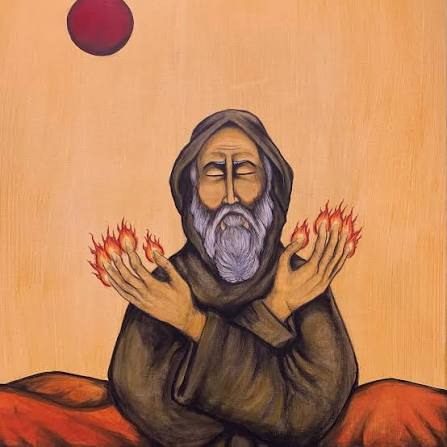
 Cycles of Newness
Leave a comment