
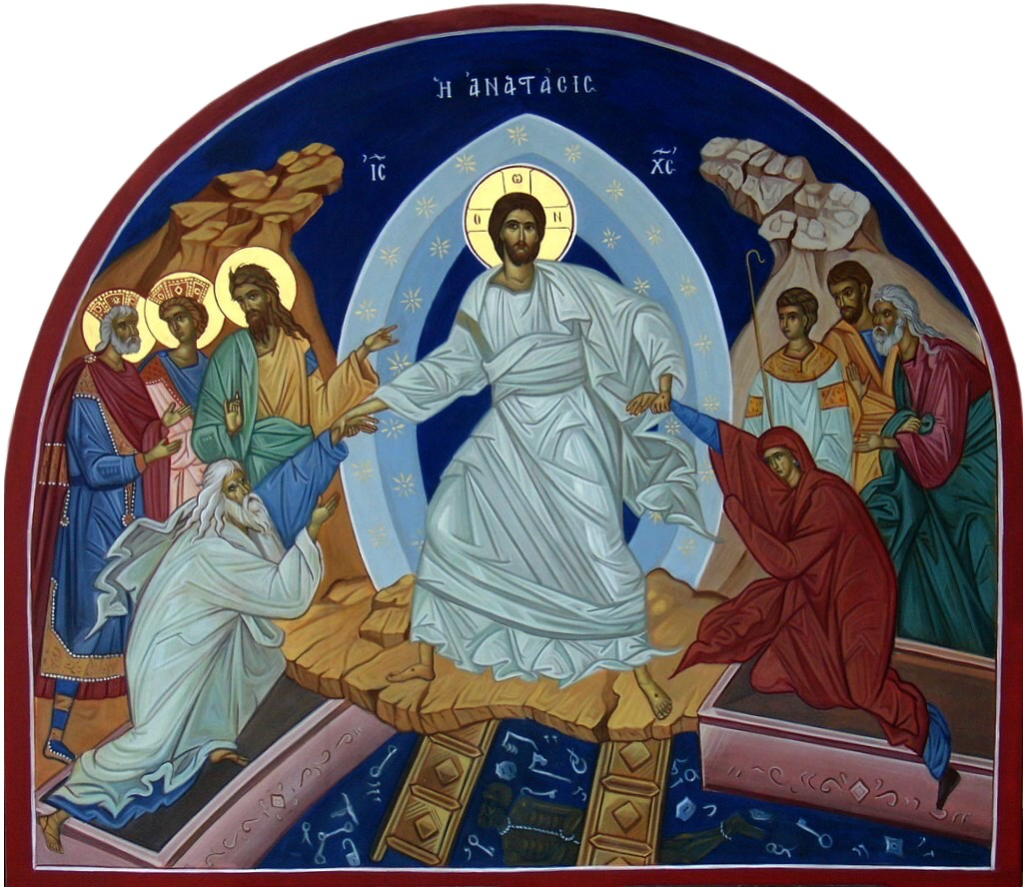
Christ is risen from the dead, trampling down death by death, and upon those in the tombs bestowing life.
— Paschal Troparion
Today a friend of mine was at a Protestant church where the sermon was about Christ on the cross taking the punishment for our sins. Afterward she asked me a good question. Why don’t the Orthodox talk about the cross that way? Why do we sing about Christ entering death, trampling down death by death, instead? And do we have a Scripture for that, or is it something else?
I want to be careful here. The Orthodox don’t reject the idea that Christ bore the penalty for our sins. That image is plainly in Scripture: Isaiah’s suffering servant was “wounded for our transgressions.” The Fathers use it too. St. Nicholas Cabasilas uses it in The Life in Christ. What I’d say is that the cross is far more than a punishment. I don’t want to separate the two. But if you make one image like punishment the whole thing, you lose most of what happened on Golgotha.
How the West came to pick one image
Yesterday I recorded a lecture on the context behind the Eastern and Western ways of understanding things like the sacraments, the Church Fathers, and salvation. In the West, St. Anselm framed salvation around satisfaction: we owe a debt we can’t pay, and Christ pays it for us. The Reformers later sharpened that into penal substitution. It’s a very Latin way of seeing things. Rome was brilliant at law, and language, law and culture all grow together. So it’s no surprise the Latin world explained salvation in legal terms.
There was a further reason. After the Western empire collapsed, the Latin Church was rebuilding a culture with one great see, a different language, and a growing love for Aristotle and dialectic. Dialectic is a method for finding the answer, the one explanation that makes the most sense. You choose one image and you work it through to the end.
The Semitic and Greek mind works differently. It’s more like a council than a lecture hall. It holds a whole range of images together and won’t let any one of them become the whole truth.
The disciples didn’t proof-text
This is what struck me as I was getting into my car today. Why do we assume we can only talk about salvation through the specific verses that describe it? The apostles did not teach that way.
They did have the Old Testament, and they used it constantly to describe what they had experienced in Christ. But prophecy doesn’t narrow things down; it opens them up. The apostles weren’t building proof-texts or saying, “If it isn’t in the Law and the Prophets, we can’t say it.” They said new things all the time, because something new had happened.
Gathering on the eighth day, the day of the Kingdom beyond the seven days of creation, was brand new. That the Messiah would be God in the flesh was brand new. It was only hinted at in passages like “The Lord said to my Lord.” That the Church is His Body, that we are the flesh of Christ, was brand new. Christ Himself says the Law and the Prophets point to Him. He doesn’t point back to them for His authority. He is the revelation, the source and the beginning.
The disciples also experienced the cross before they could explain it. The Gospels weren’t written down until decades later. In those decades the Church gathered as Acts describes: they opened the Scriptures together and broke bread together. The bishop, the presbyters, the deacons and the laity were all there as one body, with Christ at its head, just as St. Ignatius describes. Christ is in our midst. He is and ever shall be. That is where they learned what salvation is: by doing it, by being the Body of Christ in the Eucharistic assembly.
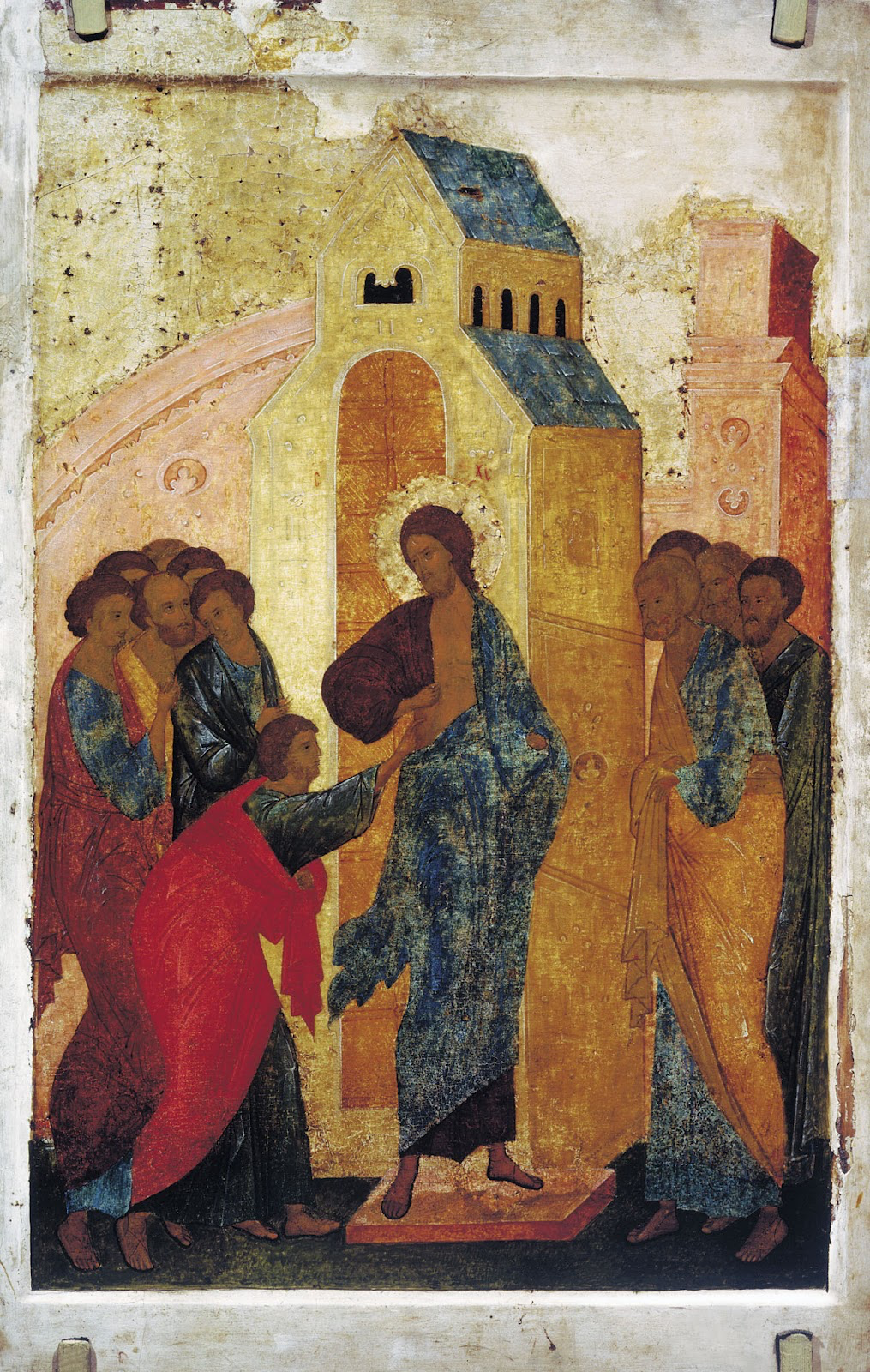
Think of the road to Emmaus. Christ opened the Scriptures to the two disciples, and it still didn’t click. Then He took the bread and broke it, and their eyes were opened. They recognized Him at the table, not by studying the text.
Every image fulfilled
Once they recognized the risen Christ, the cross opened up in many directions at once.
If He had truly risen, and no one had ever done that, then He must have destroyed death. That is Christ the Victor. If they had been bound by sin, they now saw Him blowing the bars off Hades, and they knew they were free. That is the ransom, the captives led out of death the way Israel was led out of Egypt. And when He lifted up the bread, every Jew in the room knew what an offering was. Their people had been offering sacrifices since Moses received the pattern of the tabernacle. That is the Lamb, the sacrifice, the penalty paid.
Egypt, the tabernacle, the Flood, the Fall, the prophets: every image of the Old Testament was fulfilled in Him. The disciples were good Jews, and they did what Jews do. They kept every image and didn’t pick just one. The Orthodox simply kept doing that.
When an image goes too far
To be honest, the Orthodox today have swung the pendulum the other way. There’s so much talk about penal substitution in Catholic and Protestant circles that we tend to answer, “No, it’s Christus Victor!” Partly that’s because the words penalty and substitution now carry meanings that would have been strange two thousand years ago. Maybe in another thousand years it will balance out.
Pastorally, though, there’s a real reason for the emphasis. A lot of people carry an “I deserve to be beaten, so God had to beat Jesus instead” mentality, and we want to help them out of it. Metropolitan Kallistos Ware makes this point in his lecture on salvation. Push the penal image too far and you have to ask who is beating whom. Is the Father beating the Son? The same thing happens with the ransom image. Push it too far and you have to ask whom the ransom was paid to. Does God owe the devil something?
These are all images. They are metaphors, physical words for a spiritual mystery. We live in a world that is both physical and spiritual, but our senses and our passions are tuned to the physical. The saints learn to see spiritual things with the eye of the nous, and then they have to translate them for the rest of us, who are still carnally minded. The real limit on any model of salvation isn’t the model. It’s us.
The cross is the resurrection
Consider how the Church first portrayed the crucifixion. We tend to break it into stages: Christ dies to pay for sin, then lies in the tomb, then death can’t hold Him because He wasn’t guilty, so the devil gets hoodwinked and Christ bursts out. We take it apart and analyze each piece.
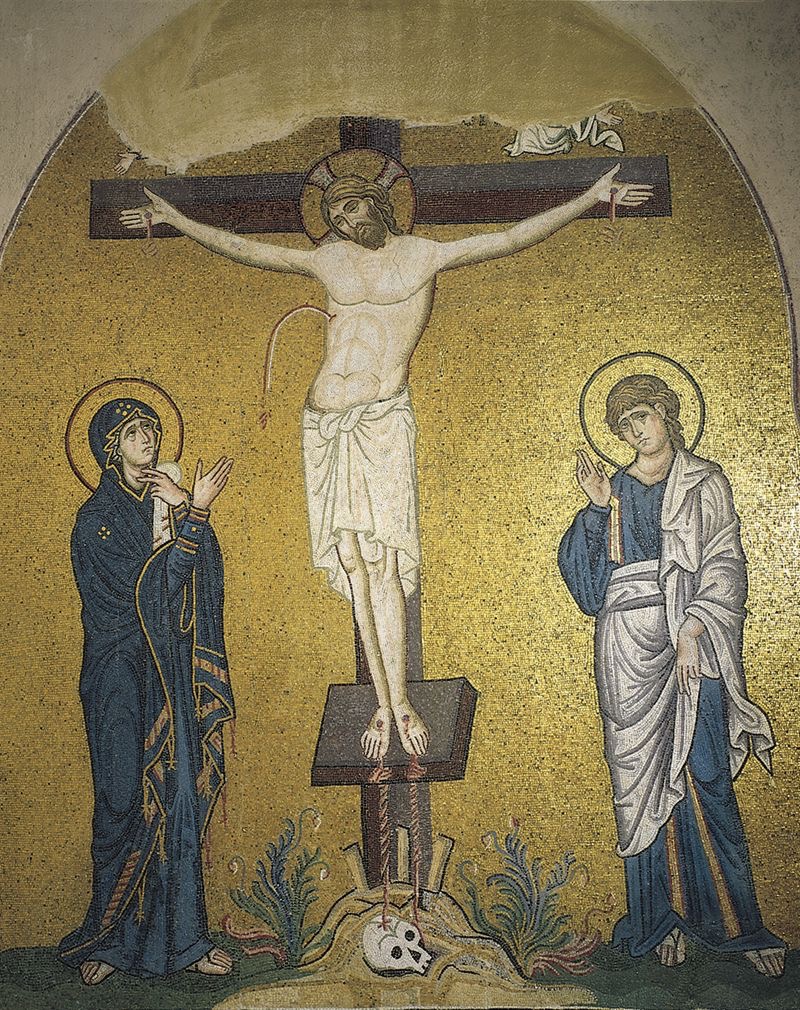
The earliest images of the crucifixion don’t show a defeated corpse. Christ stands on the cross with His arms outstretched in victory. Like the bronze serpent Moses lifted up in the wilderness: look upon it and live. Christ applies that image to Himself in John 3. The crucifixion and the resurrection are one icon.
The early Church didn’t celebrate them separately either. There was no Good Friday service followed by an Easter morning service. Pascha was the whole thing: the cross and the empty tomb as one Paschal mystery. In baptism we are baptized into His death and His resurrection, and the two are never pulled apart.
We still experience this every time we celebrate the Eucharist. This is My Body, broken for you. We receive what was broken, and it is life. It’s the great paradox: whoever loses his life will find it. Only by dying do we live. The One who descended is the same One who ascended.
A sword that unites
Someone will object that Christ said He came “not to bring peace but a sword,” to set brother against brother. That’s true, and it is where we start. We have to be cut off from the old self of sin. But as Saint Sophrony of Essex said, “the way down is the way up.” We aren’t freed from the old man by denying he exists, or by calling our friends and family heretics and consigning them to hell. As Solzhenitsyn put it, the line between good and evil runs through every human heart. We’re freed from the old man by taking him up onto the cross and rising with Christ.
Christ came to divide so that He could unite. He takes the sword to our sin and to anything that has become an idol between us and Him. If even our family’s approval stands between us and Christ, He will cut that away. But when we surrender to Him, we find our family again in Him. In the end the only division left is the one we choose: ourselves against God. The Trinity is one, and all who would be united to God are united. God will never force us to be united to Him.
So here is my answer. The Orthodox don’t build everything on the penalty because of what we have experienced: Christ in the Eucharist, Christ in the whole Church gathered together. The penalty is real, but it’s only one part of the story. The penalty isn’t the resurrection, and it isn’t Christ. Christ is Christ, and He came to unite us to Himself.
That is what theosis means. More than we want to escape punishment, we want Him. Punished or not punished, heaven or hell as a ledger, isn’t really our concern. We want to be united to God, that He may be All in All.


Leave a Reply